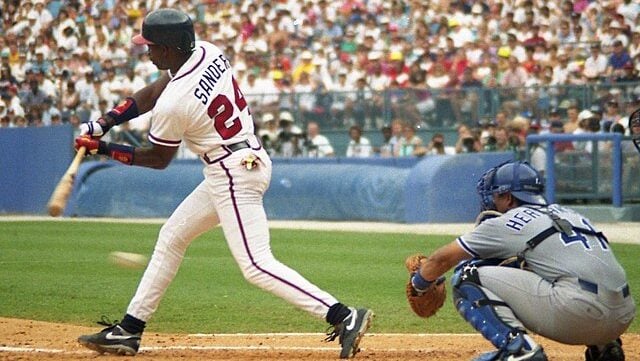
While his Pro Football Hall of Fame credentials are undeniable, collectors are increasingly recognizing the investment potential and nostalgic appeal of Deion Sanders baseball cards. Sports Illustrated’s Matt Schilling recently identified three cards from Sanders’ MLB tenure that continue to drive demand, representing different parts of his dual-sport legacy.
The intersection of football and baseball makes Sanders’ cards fascinating from a collecting standpoint. We’re looking at pieces of history that capture one of the most impressive athletes of the 1990s during his days on the diamond with the New York Yankees, Atlanta Braves, and Cincinnati Reds.
Editor’s Note: New to MLB Daily Dingers? Then Start Here!
3 ‘Essential’ Deion Sanders Baseball Cards
According to Schilling, here are the three Deion Sanders baseball cards that serious collectors should prioritize:

- 1989 Topps Traded Rookie Card (#110T): This Yankees-era gem showcases Sanders before the “Prime Time” persona fully emerged, making it a compelling time capsule piece.

- 1990 Leaf Rookie Card (#359): The premium Leaf set quality sets this apart from the era’s more common offerings, with amazing photography and card stock that has aged quite well.

- 1992 Upper Deck Baseball Insert (#SP3): This could be the most coveted card of the trio. This dual-sport showcase card perfectly displays Sanders’ unique athletic versatility in a visually striking format. I just love this one!
Why the 1992 Upper Deck Insert Dominates the Market
The 1992 Upper Deck Baseball insert card (#SP3) stands as the crown jewel of Sanders’ baseball cardboard, and the pricing data demonstrates why collectors are willing to pay premium prices. While raw copies trade in the $4-5 range, PSA 10 graded examples have fetched up to $180.
This card is irresistible because of its innovative dual-sport design concept. Upper Deck captured lightning in a bottle by featuring Sanders in both his baseball and football uniforms on the same card. It essentially serves as a sports history lesson, documenting an era when one athlete could legitimately play both MLB and NFL simultaneously (you know, like Bo Jackson also did).
The insert’s scarcity factor also can’t be overstated. These weren’t guaranteed in every pack, making them genuine chase cards that required either exceptional luck or significant investment to nab. That built-in rarity, combined with Sanders’ popularity across two major sports fan bases, creates a perfect storm for sustained collector interest.
The Grading Game: Where Condition Becomes King
The dramatic price differences between raw and graded versions of these Sanders cards once again illustrate that condition is everything in today’s market. Take the 1989 Topps Traded rookie, which jumps from $1.50-2.00 raw to an average of $40 in PSA 10 condition. That’s a 2,000% increase for perfect centering, corners, and surface quality.
This grading premium reflects the modern collecting landscape where investors and serious collectors demand authentication and condition verification. The 1990 Leaf rookie follows a similar pattern, climbing from $1.50-2.00 raw to $45-50 in PSA 10 form. Professional grading services like PSA and BGS have essentially created a two-tier market: raw cards for casual collectors and budget-conscious fans, and graded cards for serious investors who understand that condition drives long-term value appreciation.
Future Outlook: Why Sanders’ Baseball Legacy Continues Growing
Sanders’ football coaching career at Colorado has introduced his athletic legacy to an entirely new generation of sports fans, many of whom could be discovering his baseball accomplishments for the first time. This renewed visibility creates fresh collector interest in his diamond-era cardboard, particularly among younger collectors who appreciate his dual-sport ability.
The rarity factor will only intensify over time. High-grade examples of 1990s cards become increasingly scarce as more get damaged, lost, or permanently locked away in collections. Sanders’ unique distinction as the only athlete to play in both a Super Bowl and World Series ensures his cards maintain cross-sport appeal that transcends typical baseball collecting boundaries.
For collectors considering Deion Sanders baseball cards, the current market presents an intriguing opportunity. While prices have risen significantly, they remain relatively affordable when looking at comparable stars from the same era. Sanders’ cardboard offers the perfect blend of athletic achievement, historical significance, and visual appeal that defines collectible sports memorabilia.
Love home runs? Sign up for my Substack today and start getting interesting home run-related observations straight to your inbox!