The 1970s delivered some of the most iconic Topps baseball cards in hobby history, and I’m not just talking about the obvious ones.
Sports Illustrated’s Jason Schwartz identified 10 “essential” cards from the decade that go beyond market value. His picks capture moments, personalities, and design innovations that defined an entire generation of collecting. I like how he deliberately avoided the typical “most expensive cards” approach that many decade retrospectives tend to take. Instead, his list focuses on historical significance, aesthetic beauty, and cultural impact.
Editor’s Note: New to MLB Daily Dingers? Then Start Here!
The Complete List of ‘Essential’ 1970s Topps Baseball Cards
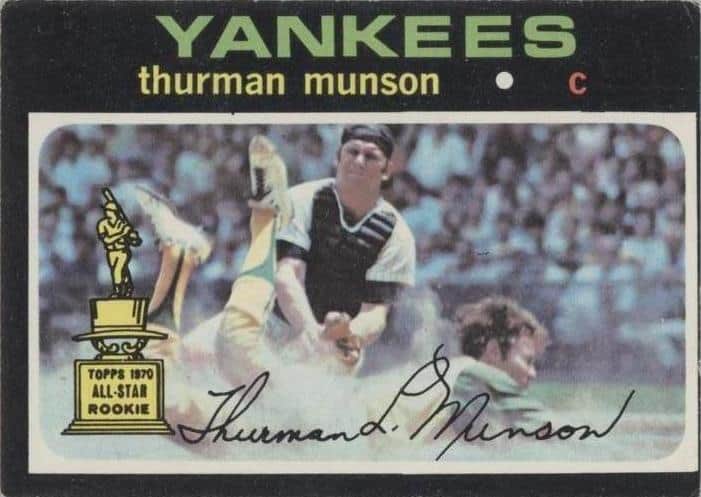
According to Schwartz, here are the 10 cards that perfectly display cardboard excellence during the 1970s:
- 1971 Topps Thurman Munson: Features striking jet-black borders and the original All-Star Rookie trophy design that became a template for future sets.
- 1972 Topps Roberto Clemente: The final card issued during the Hall of Famer’s lifetime, creating an unintentionally poignant piece of baseball history.
- 1972 Topps Dock Ellis (Registration Error): A psychedelic printing mishap that perfectly captured the era’s spirit.
- 1973 Topps Dick Allen: Showcases the 1972 AL MVP’s powerful swing during his most dominant season.
- 1974 Topps Hank Aaron: Commemorates baseball’s most historic home run with the simple yet powerful “New All-Time Home Run King” designation.
- 1976 Topps Johnny Bench: Widely considered the decade’s most perfectly executed card in terms of photography and design.
- 1976 Topps Traded Oscar Gamble: Features the most magnificent afro in baseball card history alongside a clever headline.
- 1977 Topps Mark Fidrych: The hobby’s first-ever All-Star/All-Star Rookie combination card featuring “The Bird” at his peak.
- 1978 Topps Reggie Jackson: Captures Mr. October immediately following his legendary three-homer performance in the World Series.
- 1979 Topps Bump Wills (Error): Created a collecting phenomenon that captivated collectors and demonstrated the unique appeal of error cards.
While some cards are pictured here, you can get a look at each one in Schwartz’s original article.
Why the 1976 Topps Johnny Bench Stands Above the Rest
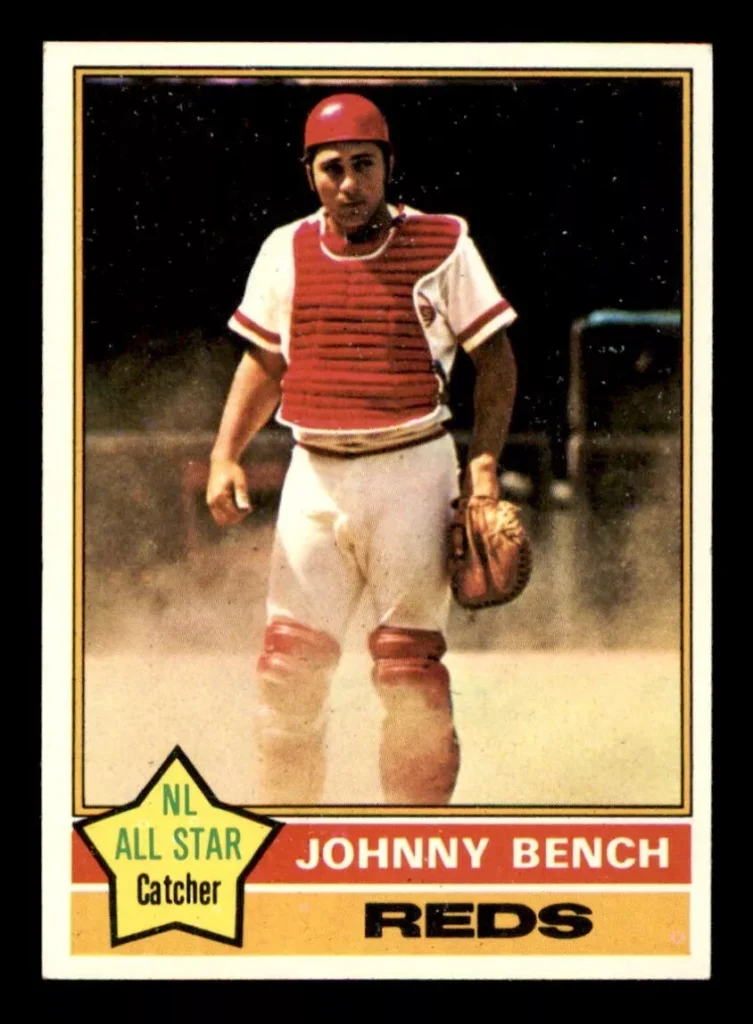
Schwartz called the 1976 Johnny Bench card “perfect,” and I can see why. The photo captures Bench in his prime (a two-time MVP and backbone of the Big Red Machine) with elements that make this vintage piece of cardboard just beautiful.
The card’s technical execution represents Topps at its absolute peak. The crisp focus, ideal lighting, and Bench’s confident pose create an almost three-dimensional effect. Combined with the clean 1976 design aesthetic and perfect color, this card embodies everything that made 1970s Topps baseball cards special.
It’s no wonder that even in lower grades, this card can command premium prices from collectors who recognize all these factors.
The Cultural Phenomenon of 1979 Topps Bump Wills

The Bump Wills error card deserves special recognition since it demonstrates how printing mistakes can create unexpected collecting magic.
This wasn’t simply about scarcity. It was about the excitement of discovery that defined childhood collecting. The corrected version only amplified the original’s appeal, establishing the template for how error cards could drive hobby engagement. Decades later, both versions remain highly sought after, proving that sometimes the best cards are the ones that weren’t supposed to exist.
The Lasting Impact of 1970s Topps Innovation
The decade’s cards established design principles and collecting concepts that continue to influence the hobby. Topps introduced the All-Star Rookie designation, perfected action photography techniques, and demonstrated how cards could serve as historical documents rather than simple player portraits.
These 10 cards prove that true cardboard greatness isn’t always measured in auction results. The 1970s represented Topps’ creative peak, when there were experiments with bold borders, innovative layouts, and photography that captured players’ personalities. From Munson’s presence to Fidrych’s energy, these cards displayed the power of visual storytelling.
Modern collectors often overlook this era in favor of more expensive vintage or contemporary releases, but that’s exactly what makes 1970s Topps baseball cards so compelling. They offer the perfect combination of affordability, historical significance, and aesthetic appeal that serious collectors enjoy. Whether you’re drawn to Aaron’s historic achievement or Gamble’s magnificent hair, these cards remind us why we fell in love with collecting in the first place.
Love home runs? Sign up for my Substack today and start getting interesting home run-related observations straight to your inbox!