While the Junk Wax Era was on the verge of getting underway in the mid-1980s, the 1986 Topps baseball cards set was still doing its thing. This set might not command the premium prices of others from the same era. However, it represents pure nostalgia wrapped in cardboard.
Sports Illustrated’s Jason Schwartz recently highlighted five “essential” 1986 Topps baseball cards. The complete 792-card set could be had for somewhere around $20, but these particular cards still document legendary achievements, career-defining moments, and the kind of baseball nostalgia that can still get the attention of vintage collectors.
Editor’s Note: New to MLB Daily Dingers? Then Start Here!
Standout Topps Baseball Cards From the 1986 Collection
According to Schwartz, these five cards represent the cream of the 1986 Topps crop:

Pete Rose Record Breaker: This commemorates Rose’s pursuit of Ty Cobb’s all-time hits record. This card freezes one of baseball’s most controversial figures at his statistical peak.
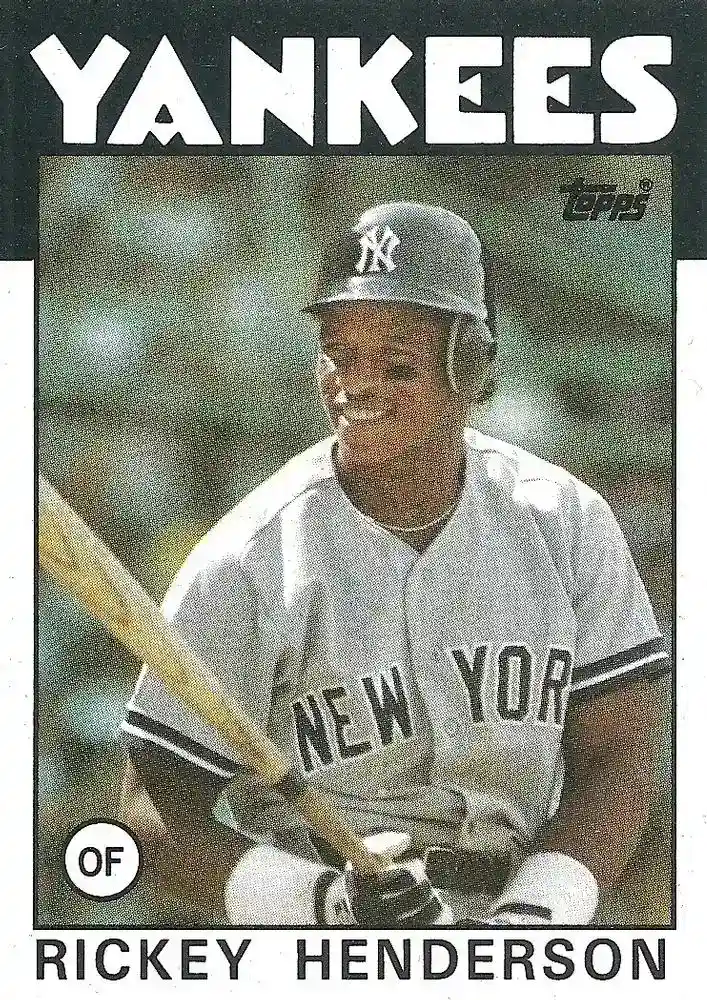
Rickey Henderson: Here’s the Man of Steal in pinstripes during his first stint with the New York Yankees.
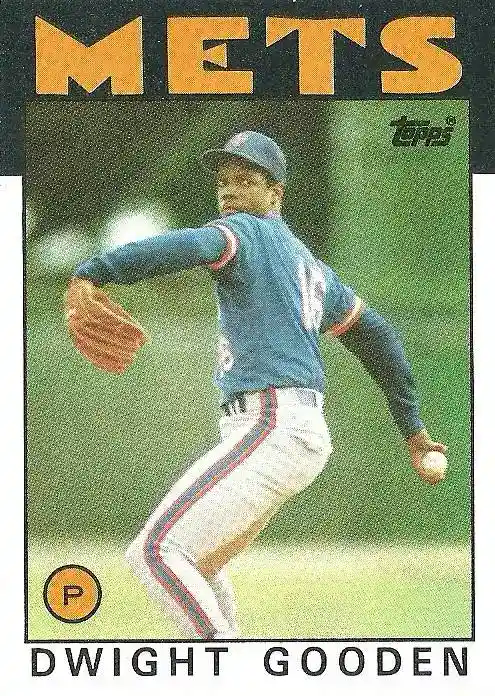
Dwight Gooden: The young phenom’s second-year card became a collector favorite, representing Doc’s stats from his 1985 National League Cy Young performance.
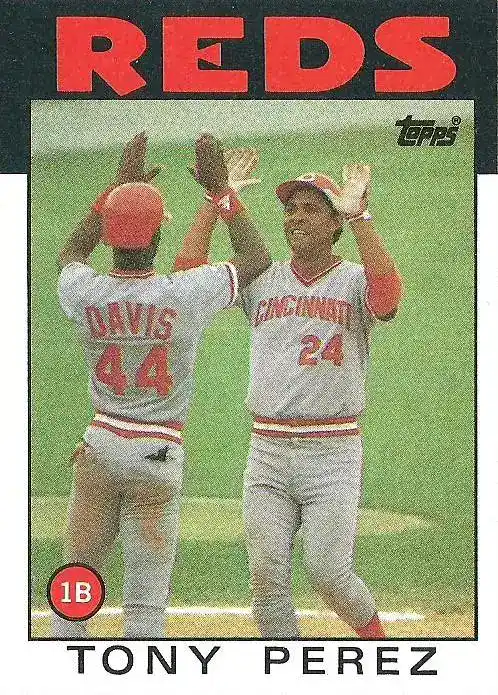
Tony Perez: An unexpected gem featuring the Reds legend sharing a high ten with Eric Davis.
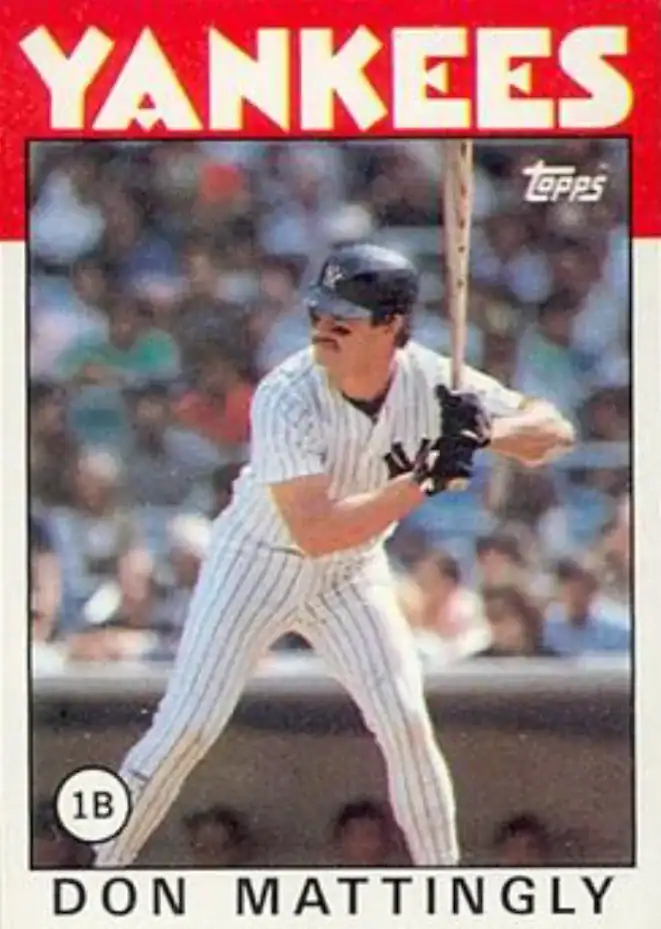
Don Mattingly Box Bottom: Technically outside the base set, this red-bordered parallel of Donnie Baseball introduced collectors to short prints and image variations.
Why the Rickey Henderson Card Needs Special Recognition
Among these standouts, Henderson’s 1986 Topps card deserves a little extra love. The visual storytelling is what makes it particularly compelling.
Here’s Henderson, baseball’s greatest leadoff hitter, wearing the uniform of the game’s most storied franchise. Although he played for nine big-league teams across a 25-year Hall of Fame career, he’s usually associated with Oakland. That’ll happen when you spend 14 seasons with one club.
But this card was one of the first opportunities for us to see Henderson in a different uniform. He spent six years with the Athletics before landing in the Bronx ahead of the 1985 season. His first year in pinstripes was quite good, too. Rickey slashed .314/.419/.516 with 24 homers, 72 RBI, 146 runs scored (led the league), and 80 steals (also led the league).
That was a noteworthy performance because he was the first American League player to reach the 20-homer and 80-steal plateau in the same season. And just in case you were wondering, he did it again in ’86 (28 homers, 87 steals).
The Dwight Gooden Card: Capturing Lightning in a Bottle
Gooden’s 1986 Topps card might not be worth a ton today, but it represents one of the most dominant pitching performances in modern baseball history. This piece of cardboard captures Doc at the peak of his powers, coming off a 1985 Cy Young season before being one of the anchors of New York’s 1986 championship run.
The card’s enduring appeal lies in what it represents: pure, unhittable dominance. His 24-4 record and 1.53 ERA were video game numbers in real life. Gooden struck out 268 hitters while walking just 69, maintaining the kind of precision that made his opposition look helpless every time he took the mound.
It’s fascinating how this card embodied the era’s collecting philosophy. In 1986, collectors genuinely believed that cards of young superstars (even second-year cards) would appreciate dramatically over time. The Gooden card was the poster child for this thinking, as it represented both immediate star power and long-term investment potential.
The Lasting Legacy of 1986 Topps Baseball Cards
The 1986 Topps set holds a unique spot in hobby history as both an ending and a beginning. It marks the final moment when baseball cards maintained genuine scarcity before mass production took over. However, it also introduced innovations that’d shape collecting for decades. The box bottom cards with their red borders were early parallels, while the alternate photos pioneered image variations.
This set captured baseball at a pivotal moment, like Pete Rose chasing immortality, the Mets building toward a championship, and players like Henderson redefining positional expectations.
Today, the 1986 Topps set serves as an accessible entry point for vintage collecting. These cards remind us that value isn’t always measured in dollars. Sometimes it’s found in the stories the cards can tell and the memories they can preserve.