As the Home Run Derby approaches every July, fans are feeling different kinds of emotions. There’s excitement if a player from their favorite team is participating. But there’s also a little anxiety that it might destroy their swing for the second half of the regular season.
This apparent “curse” has been around for a while. I remember hearing people talk about this in the late 1990s.
Baseball curses make for great stories, but not all of them are necessarily rooted in reality. The Sporting News’ Dan Treacy took a comprehensive look at recent player performance from those who have participated in the Home Run Derby. Needless to say, what he found should put this myth to rest.
Editor’s Note: New to MLB Daily Dingers? Then Start Here!
The Numbers Tell a Different Story

Treacy’s deep dive into four seasons of Home Run Derby participants (2021-24) reveals that overall, players actually perform better after the derby, not worse. Among 32 cases studied, the average participant saw their OPS increase by 11 points in the second half.
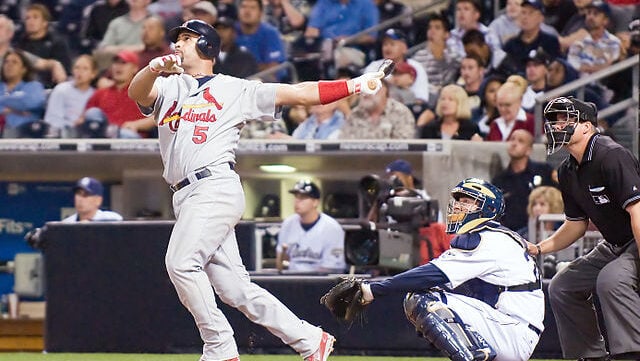
The most dramatic improvement was Albert Pujols in 2022. His OPS skyrocketed from .676 to 1.103 after his derby appearance—a staggering 427-point increase that helped fuel one of the most memorable farewell tours in recent memory. He wouldn’t have reached the 700-homer plateau without that second-half surge.
Juan Soto’s 2021 performance was equally impressive. His OPS went from .851 in the first half to 1.164 in the second half. The left-handed slugger told MLB.com’s Sarah Langs before the event that he felt it’d help his swing. “It might mess with the swing of all the guys that are locked in, but I think it’s going to fix mine because I’m hitting too many ground balls,” Soto said. It’s safe to say he was correct in that assessment.
But what about the myth that participating in the Home Run Derby disrupts a hitter’s timing, which would lead to increased strikeouts? Treacy’s research demolishes that concern, too. Strikeout rates remained virtually identical, dropping slightly from 21.5% to 21.4% across all participants.
Interestingly enough, Pete Alonso has felt this on both ends of the spectrum. His strikeout rate decreased 4.9% following the 2022 Home Run Derby, which was the biggest improvement within this sample. He also had the biggest rise in strikeout rate among this group (9.9% following the 2021 event).
Why the Myth Persists Despite the Evidence
Treacy’s analysis reveals several fascinating patterns behind post-derby “slumps.” Many participants were having career years in the first half, which made regressing to their normal performance levels inevitable. For example, Luis Robert Jr.’s 2023 second-half downturn (OPS went from .899 to .788) simply reflected a return to more typical production.
Meanwhile, external factors often explain apparent struggles. Soto (2022) and Joey Gallo (2021)—two of the biggest second-half decliners in the data—were both traded shortly after their derby appearances. Adjusting to new teams, cities, and clubhouses tends to impact performance more than a few extra hacks during the All-Star break.
The mental game plays a role, too. Alex Rodriguez famously avoided later derby invitations, stating his “responsibility is to the New York Yankees” and needing his “swing to be at its best.” When players believe in the curse, they might create self-fulfilling prophecies.
Success Stories That Prove the Point
Perhaps the most compelling evidence against the curse comes from the champions themselves. Multiple Home Run Derby winners rank among the biggest second-half improvers, including Pete Alonso’s dominant 2021 campaign (119-point rise in OPS) and Teoscar Hernandez’s 2024 performance.
After winning the 2024 derby, Hernandez’s OPS jumped from .802 to .902. He also carried that momentum straight through October, helping the Dodgers win a World Series title.
Soto’s testimonial adds another layer to this narrative. After struggling in the first half of 2021, he credited the derby with getting his swing back on track. “It really helped me a little bit get that feeling of how to put the ball in the air and everything,” he said.
How Are 2025 Home Run Derby Participants Performing?
Although MLB’s second half is less than one month old, I thought it’d be cool to check in on the performance of all eight 2025 Home Run Derby participants — especially since they were all first timers. Here’s a look at their first- and second-half numbers. We’ll specifically look at OPS and strikeout rate (all stats are current as of July 30, 2025):
Cal Raleigh
- First Half: 1.011 OPS, 25.2% K-rate
- Second Half (so far): .689 OPS, 30.8% K-rate
Junior Caminero
- First Half: .790 OPS, 20.3% K-rate
- Second Half (so far): .869 OPS, 19.2% K-rate
Oneil Cruz
- First Half: .733 OPS, 32.2% K-rate
- Second Half (so far): .732 OPS, 28.0% K-rate
Byron Buxton
- First Half: .925 OPS, 26.1% K-rate
- Second Half (so far): .687 OPS, 32.3% K-rate
Brent Rooker
- First Half: .861 OPS, 21.6% K-rate
- Second Half (so far): .781 OPS, 27.3% K-rate
James Wood
- First Half: .915 OPS, 27.6% K-rate
- Second Half (so far): .406 OPS, 46.9% K-rate
Matt Olson
- First Half: .830 OPS, 23.6% K-rate
- Second Half (so far): .769 OPS, 19.3% K-rate
Jazz Chisholm Jr.
- First Half: .861 OPS, 26.9% K-rate
- Second Half (so far): .572 OPS, 31.4% K-rate
So far, the only player who has performed better in both categories compared to their first-half performance is Caminero. But, of course, there’s still a lot of baseball left to play. It’ll be interesting to see where these numbers settle by the end of September.
Love home runs? Sign up for my Substack today and start getting interesting home run-related observations straight to your inbox!