Could this be the biggest baseball card deal ever? I have no concrete data to actually back that claim up, but it feels like it should be.
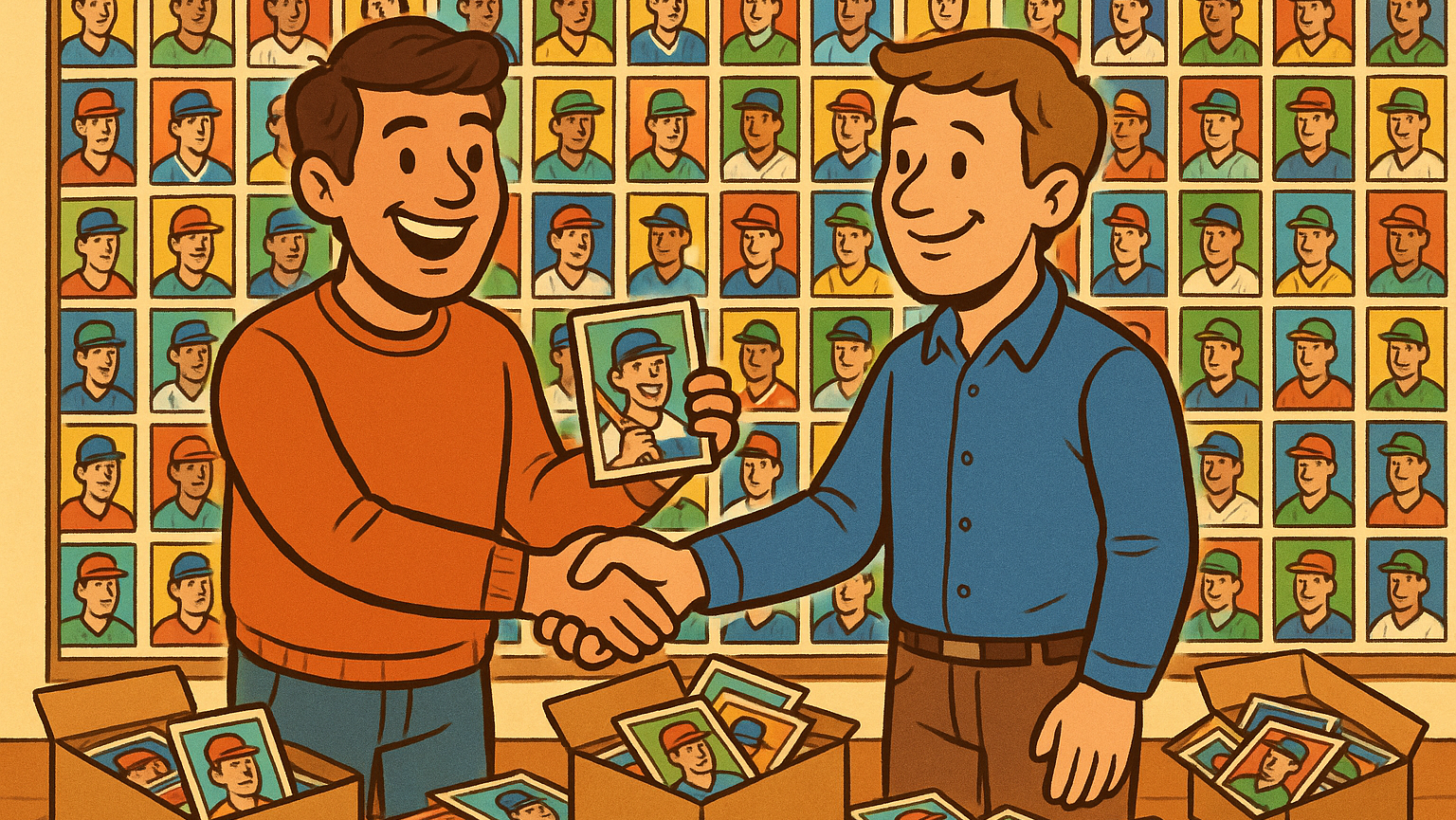
When Brandon Steiner and Barry Telesnick finalized their agreement, they weren’t just moving some vintage treasures—they were transferring an entire museum’s worth. It wasn’t just a few high-priced cards or something like that. Steiner acquired four million (!!) cards.
Editor’s Note: The Sports Card Cash-Out System Guide is Here… Buy it now!
The Specifics of This Eye-Popping Baseball Card Deal
According to the New York Post’s Angela Barbuti, Steiner recently closed a deal with Telesnick for a haul that could be worth a total of $7 million. It includes complete Topps sets starting from 1948, countless rookie cards, thousands of autographed pieces, and 30 Babe Ruth cards.
Telesnick dedicated more than 50 years to building this empire, and he knew exactly how to take care of his possessions. The collection lived in his climate-controlled attic for 35 years, safeguarded by security cameras and environmental controls. Some individual sets took him four decades to complete.
The arrangement works on consignment. So, Telesnick will receive 20-35% of proceeds from sales as Steiner processes, authenticates, and grades the inventory through his CollectibleXchange platform.
Brandon Steiner Is the Perfect Curator for This Collection
As you can imagine, Steiner doesn’t just buy and flip memorabilia. He understands the industry and what goes into it in a way most dealers never quite get. This is the guy who purchased the original Yankee Stadium and broke it into pieces so fans could have an opportunity to own a piece of history.
After building Steiner Sports into the brand it is today, the 66-year-old Brooklyn native launched CollectibleXchange in 2019 as a marketplace designed for serious collectors.
What sets this deal apart is Steiner’s nervousness about the responsibility. Getting these cards into the right hands matters more to him than maximizing profit, which you don’t hear often in an industry that can feel purely transactional. Of course, what he’s done in his career up to this point likely allows him to think about that more than some others.
Trying to Put a Haul of 4 Million Cards in Perspective
This isn’t just a collection of random baseball cards, folks. It’s a physical timeline of baseball’s evolution via cardboard. Every design change, every photography innovation, every statistical milestone from nearly 80 years of Topps production lives in this stockpile.
Steiner mentioned he’d never seen certain sets and cards before, despite spending the majority of his life in the industry. That alone should tell people about just how much depth there is in this collection.
Each of those Babe Ruth cards represents a different era of how we took a glimpse of baseball greatness. Some might only be worth a few hundred bucks, but others could be rare and eventually sell for six figures. The authentication/grading process will reveal what kind of treasures are about to become available, which could be the most exciting part of this entire process.
The Emotional Weight of Letting Go
I keep thinking about what Telesnick must be feeling right now. Fifty years of hunting, organizing, preserving—and then watching it all leave your attic. It’s not like he was forced into doing it, and he’ll get compensated financially for everything that’s sold, but we’re talking about a lifetime of dedication and emotional attachment to all this.
These weren’t just investments to him; they were four decades of Saturday mornings at card shows, late nights organizing sets, and the quiet satisfaction of finally completing certain sets.
If I were in Steiner’s shoes, I’d probably also feel overwhelmed by the logistics, along with being excited about what’d be coming next. Where do you even start with four million cards? This is worthy of a documentary-style series showing the opening of those untouched boxes, finding unexpected gems, and shining a light on the authentication journey. I’d watch it, and I’m sure many others would, too.
Legit history will be getting distributed one piece at a time once this collection finally hits the open market. Some cards will find their forever homes with collectors who’ve searched for them for years, while others will surprise us with how valuable or rare they are.
It’s not outrageous to think that this baseball card deal will lead us to discoveries that might reshape how we view vintage baseball cards. Do you have any predictions on what might be the most valuable piece of memorabilia that gets sold?
Love home runs? Sign up for my Substack today and start getting interesting home run-related observations straight to your inbox! And if you’re new to MLB Daily Dingers, you should start here.