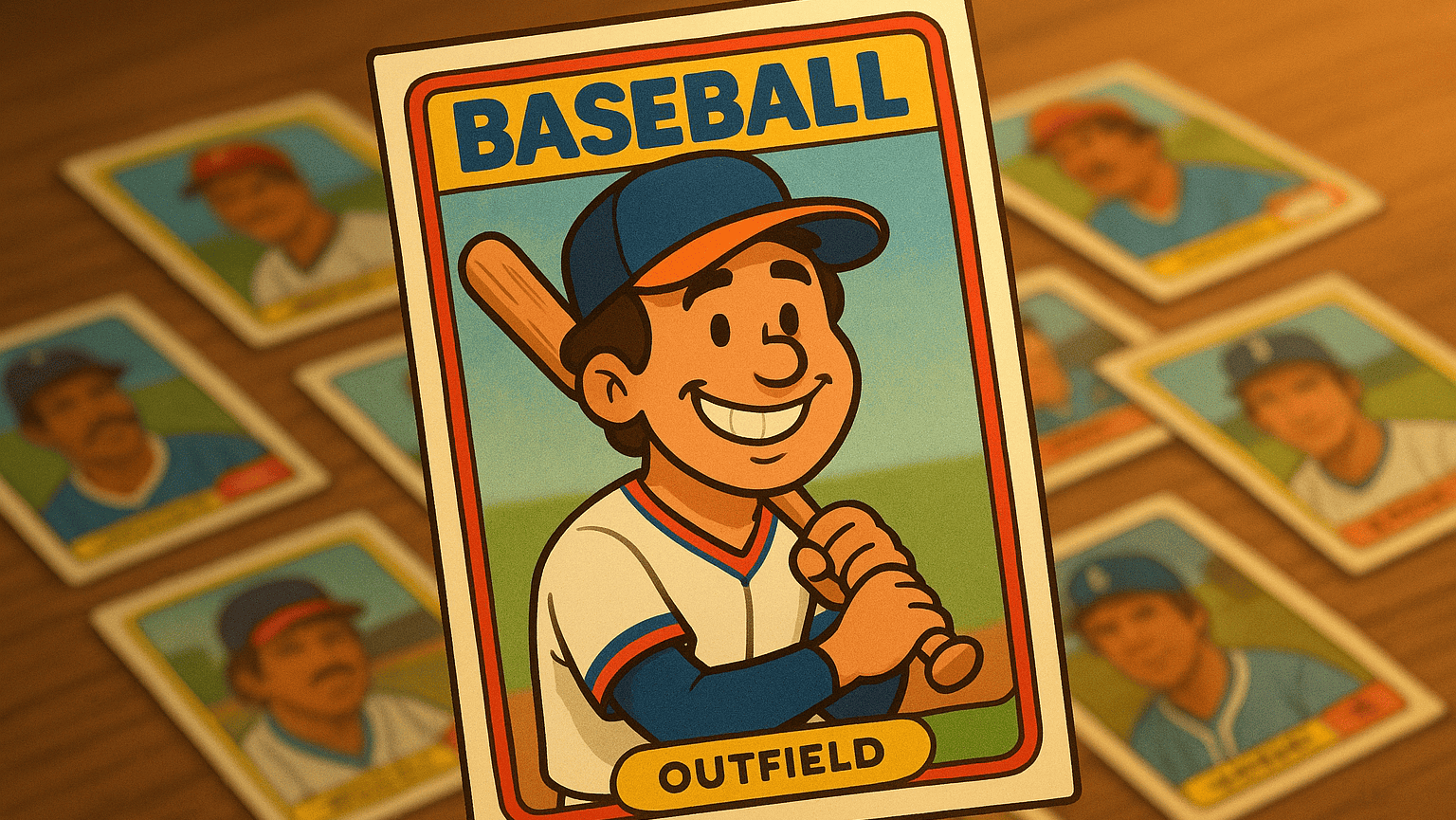
Vintage baseball card collecting has a way of transporting us back to simpler times. You know, like when we’d tear open wax packs hoping for that one special card.
David Gonos of the Happy Hobby Newsletter recently highlighted 10 standout 1978 Topps Baseball cards, and it got me thinking about how accessible some of these gems still are for today’s collectors. Several Hall of Fame rookie cards from this set can still be secured without taking out a second mortgage.
The ’78 Topps design stands as one of the hobby’s most beloved because it perfectly captured the era while showcasing some of the game’s brightest emerging stars.
Editor’s Note: Looking to Sell Sports Cards? Here’s How to Do It Quickly & Easily
5 Must-Have 1978 Topps Baseball Cards
According to Gonos, the below five cards represent some of the awesome value from the 1978 Topps set:

Eddie Murray (#36) – Baltimore Orioles Rookie Card: Coming off his 1977 AL Rookie of the Year campaign, Murray’s debut cardboard fetches around $215 in PSA 8 condition.

George Brett (#100) – Kansas City Royals: The future batting champion’s card sits at approximately $50 in PSA 8, though condition sensitivity makes high-grade examples surprisingly scarce. There are only 10 PSA 10s among over 2,100 submissions.

Andre Dawson (#72) – Montreal Expos: The Hawk’s first solo card (following a 1977 multi-player rookie) values around $45 in PSA 8, commemorating his NL Rookie of the Year season with the Expos.

Dale Murphy (#708) – Atlanta Braves Multi-Player Rookie: Listed on a four-panel Rookie Catchers card alongside Lance Parrish, Murphy’s early cardboard runs about $45 despite him eventually becoming an All-Star outfielder and two-time MVP Award winner.

Thurman Munson (#60) – New York Yankees: The Yankees captain’s card from his final full season before his tragic 1979 death carries emotional weight alongside its $35 PSA 8 price tag.
Eddie Murray: The Underappreciated Iron Man
Murray’s inclusion in this set captures the moment when a future legend was just beginning to reveal his greatness. The look on his face on this card is just perfect, too.
The switch-hitter slashed .283/.333/.470 with 27 home runs and 88 RBI as a rookie, immediately establishing himself as a player to build around in Baltimore. But Murray’s true brilliance emerged over the long haul.
Steady Eddie embodied consistency. He collected 3,255 career hits while crushing 504 home runs, making him one of just seven players ever to reach both the 3,000-hit and 500-homer milestones. He’s also the only switch-hitter to do it so far.
During the 1980s, no player drove in more runs than Murray’s 996 RBI—a testament to his reliable excellence. His ability to hit from both sides of the plate and his clutch gene made him invaluable across two decades with the Orioles, Dodgers, and several other clubs.
The Hawk Takes Flight: Andre Dawson’s Lasting Impact
Dawson’s 1978 Topps card marks a pivotal moment in hobby history as his first individual card following the multi-player rookie. That matters because it gave collectors their first true Dawson card, and what a career they were witnessing the beginning of.
The Hawk patrolled Olympic Stadium’s artificial turf…like a hawk, sacrificing his knees for web gems that eventually earned him eight Gold Gloves. His 438 career home runs and 1,591 RBI speak to his offensive abilities, but Dawson’s true value went beyond statistics.
He won the 1987 NL MVP despite playing for a last-place Cubs team, which is an almost unprecedented achievement that highlighted how dominant he was. His ability to combine power, speed (314 stolen bases), and elite defense made him a five-tool talent.
The Significance 1978 Topps Baseball Cards
The 1978 Topps Baseball release arrived at a fascinating crossroads in both the hobby and the sport itself. This 726-card set was Topps’ largest offering in several years, signaling the company’s recognition of growing collector demand.
What makes this release particularly significant, though, is its timing within baseball’s labor relations landscape. The 1970s saw increased player mobility following the introduction of free agency, and the ’78 set captured stars in transition while documenting emerging dynasties. The Yankees’ back-to-back championships in 1977-78 provided marquee names, while teams like the Royals and Dodgers had future Hall of Famers in their primes.
From a collecting standpoint, the set’s submission numbers to PSA tell an interesting story. About twice as many 1978 cards have been graded compared to the 1977 release, showing sustained collector interest and the set’s strong reputation.
This higher submission rate also means more competition for top-graded examples, making condition-sensitive cards like the George Brett tough to acquire in pristine shape. The 1978 Topps set essentially bridges vintage and modern collecting, offering both nostalgic appeal and genuine scarcity in high grades.
Love home runs? Sign up for my Substack today and start getting interesting home run-related observations straight to your inbox! And if you’re new to MLB Daily Dingers, it’s probably best to start here.