Sometimes, the most mind-blowing baseball facts are hiding in plain sight. What Ted Williams did in the 1940s is a good example of that.
Teddy Ballgame put up the kind of numbers that’d make every player jealous — especially when you remember just how little of an opportunity he had to make an impact compared to some others.
Editor’s Note: The Sports Card Cash-Out System Guide is Here… Buy it now!
The Ted Williams Decade That Isn’t Talked About Enough
#RedSox Ted Williams from 1941 to 1947:
1941 – batted .406
1942 – Triple Crown
1943 – WWII
1944 – WWII
1945 – WWII
1946 – MVP
1947 – Triple Crown pic.twitter.com/7ZeosygrJp— Ryan M. Spaeder (@theaceofspaeder) August 30, 2018
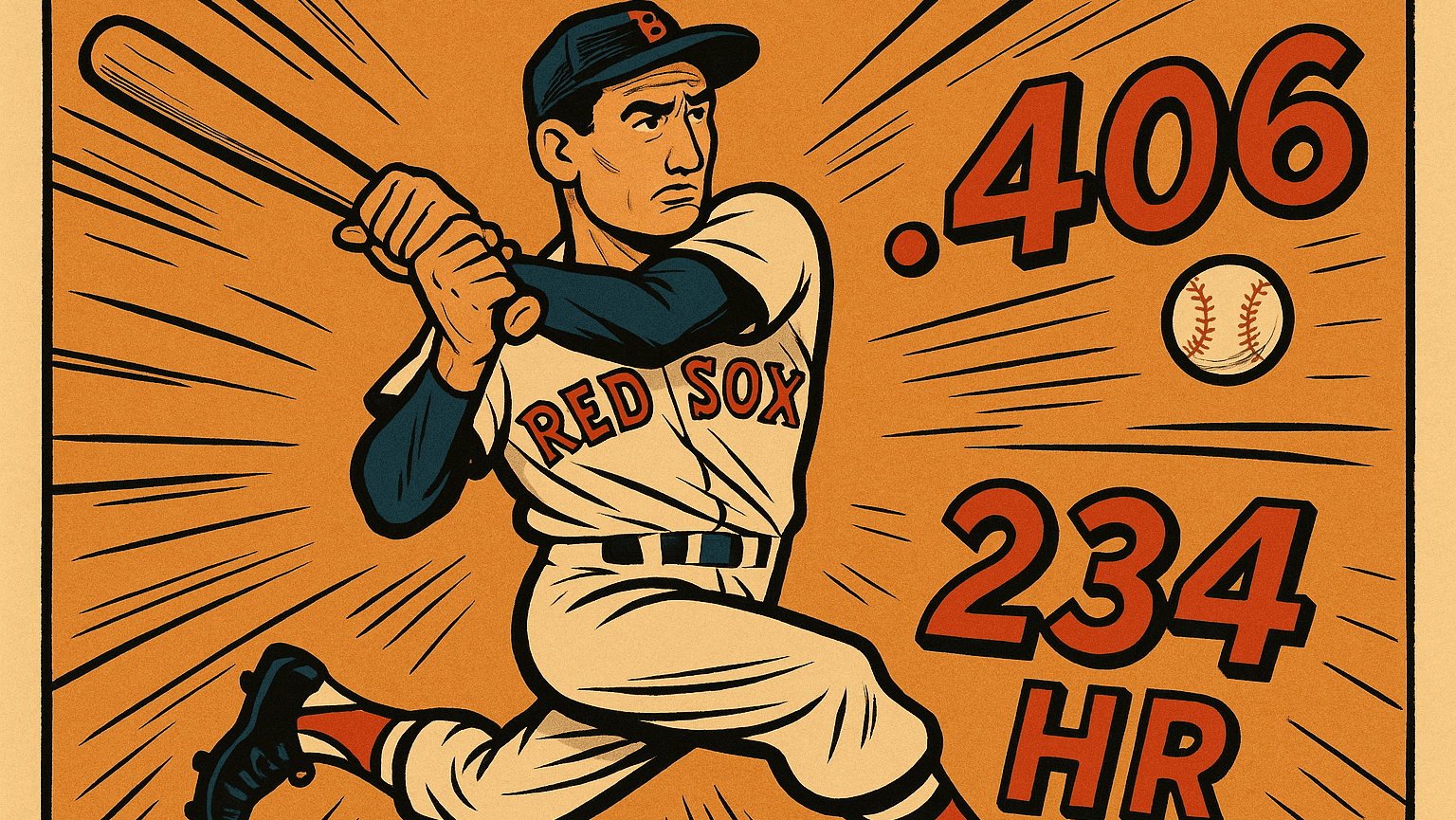
While other players were compiling counting stats over 10 seasons from 1940-49, Williams missed 1943, 1944, and 1945 entirely for military service. And he still led the league in home runs for the decade.
Think about that for a second. He played seven seasons. Many others played more frequently than him, but the left-handed slugger’s 234 homers for the decade still finished at the top of the list.
His dominance in this singular category barely scratches the surface, though. The left-handed hitter’s .496 on-base percentage was also eye-poppingly ridiculous. Nearly half the time Williams stepped to the plate throughout the 1940s, he reached base.
The complete picture gets even better. Williams also led all of baseball in runs scored (951) and walks (994), while finishing second in OPS (1.143) and RBI (893). His 69.3 fWAR was baseball’s highest despite appearing in 390 fewer games than the second-place finisher, Lou Boudreau (61.0 fWAR).
During the years he actually played, Williams won four batting titles while also having the highest slugging percentage six times and the best on-base percentage seven times. He won Triple Crowns in 1942 and 1947, and placed within the top three of MVP Award voting six times, winning it twice.
Last, but most certainly not least, his 1941 season produced that legendary .406 batting average, a mark nobody’s touched in over 80 years.
What Baseball Lost to World War II
The alternate timeline version of Ted Williams might be baseball’s greatest “what if” story. From 1943-45, Williams served as a Marine Corps aviator during World War II, flying combat missions instead of patrolling the outfield at Fenway Park.
Those three missing seasons came right when Williams was 24, 25, and 26 years old. Based on his trajectory before and after military service, conservative projections put Williams on pace for roughly 100 more home runs and 400-plus more hits if he’d played those seasons.
We’re talking about a career that potentially finishes with 620-650 home runs and over 3,000 hits. Those numbers would’ve placed him second all-time in homers (behind only Babe Ruth at that point) and given him membership in one of baseball’s most exclusive offensive clubs.
But what makes this all truly mind-boggling is that Williams came back from flying fighter planes and immediately picked up where he left off. His 1946 return resulted in a .342 average, 38 homers, 123 RBI, 142 runs scored, and his first MVP award.
The Most Valuable Ted Williams Cards Collectors Chase
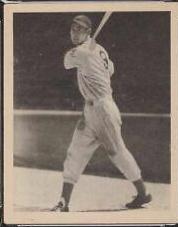
Williams’ iconic status in baseball history translates directly into the values of his cards.
The crown jewel remains his 1939 Play Ball rookie card (which you can see above). This pre-war classic features a young Williams and routinely sells for $100,000-plus in high grades. A PSA 9 example sold for $422,000 at auction in 2021, and even PSA 8 copies can fetch $150,000-$200,000 depending on overall condition.
What makes the 1939 Play Ball so special isn’t just the rarity. It captures Williams at the very beginning of what’d become one of baseball’s most legendary Hall of Fame careers.
His 1941 Play Ball card is significant because it was issued during the season in which he finished with that .406 average. High-grade examples fetch $30,000-$50,000, with gem mint copies pushing six figures. The historical context of that season drives demand through the roof.
The 1954 Topps Williams card was his first appearance in Topps’ flagship set and remains highly sought after. PSA 9 examples sell for $15,000-$25,000, while PSA 10s are virtually non-existent and would command a lot more.
Why Modern Analytics Prove Williams Right
Long before exit velocity and launch angle became popular, Williams was calculating perfect bat paths and studying pitch trajectories. His 1970 book “The Science of Hitting” is a preview of modern analytics philosophy written 40 years too early.
His plate discipline numbers are still crazy to look at. Williams never struck out more than 64 times in a season (which was his rookie year!), and during his historic 1941 campaign, he fanned just 27 times across 606 plate appearances. Williams’ combination of bat-to-ball skills, raw power, batting eye, and situational hitting created a profile that we’ll likely never see again.
The 1940s were supposed to be when a young Williams proved himself at the game’s highest level. But even with three years taken away from him, this decade became his masterpiece that should be talked about until the end of time.
Love home runs? Sign up for my Substack today and start getting interesting home run-related observations straight to your inbox! And if you’re new to MLB Daily Dingers, you should start here.