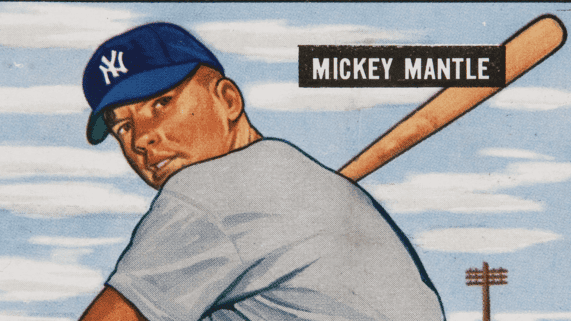
A seller walked into the Gold & Silver Pawn Shop with dreams of cashing in on his signed 1951 Mickey Mantle rookie card. He wanted to land $20,000 for it, but the Pawn Stars crew had some harsh reality waiting for him.
The episode reinforces a crucial aspect of baseball card collecting: authentication and condition can make or break even the most legendary cards. This particular 1951 Bowman Mickey Mantle rookie card carried the Commerce Comet’s signature, but it also had some serious damage.
Editor’s Note: Looking to Sell Sports Cards? Here’s How to Do It Quickly & Easily
The Pawn Shop Showdown: When Reality Hits Hard
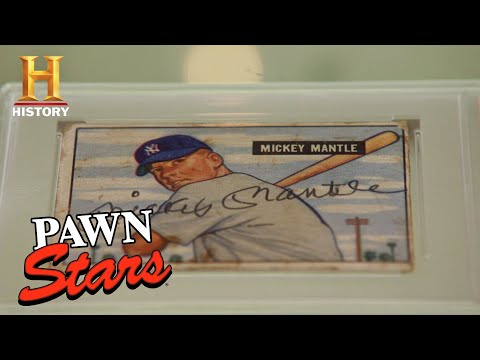
According to Market Realist’s coverage of the episode, Matt brought in his signed 1951 Bowman Mickey Mantle card, seeking $20,000 for it. He told Rick Harrison that he landed it from a friend and believed it could fetch up to $45,000 at auction based on comparable sales he’d researched.
But Harrison wasn’t immediately sold. He pointed out that Mantle signed thousands of autographs after his playing career, making authenticated signatures less rare than many collectors assume. The real question became: was this card worth the initial asking price?
Harrison’s card specialist, Dan, confirmed what any serious collector already knows: Mickey Mantle rookie cards are among the most coveted pieces of cardboard in the hobby.
After giving the card a close look, the verdict was brutal. The card had been cut and altered, and its overall condition wasn’t good. Despite carrying a legit Mantle signature, the card’s horrible condition demolished its value. Dan estimated it might bring around $10,000 at the right auction.
Harrison eventually countered with a $7,000 offer, and the two sides ultimately couldn’t agree to a sale.
What’s a Mickey Mantle Rookie Card Actually Worth?
While we already know what the above Mantle rookie auto could be worth, what about typical pricing for one that’s in better condition?
According to Sports Cards Pro, the value of a Mantle’s 1951 Bowman rookie has a wide range. But regardless of condition, it’s still not cheap. Here’s a look at the (rounded) numbers:
- Ungraded: $8,400
- Grade 7: $64,000
- Grade 8: $324,000
- Grade 9: $390,000
- Grade 9.5: $622,000
- PSA 10: $2,200,000
Even if this card grades between 2 and 4, it could cost an interested buyer somewhere between $12,000 and $16,000.
That is…a pretty penny. Although his Mantle rookie was severely damaged, you can see why Matt was trying to get $20,000 at the pawn shop. My first thought about pawn shops, though, is that they try to get the best deal imaginable for themselves. I wouldn’t be shocked if he got a better price through another avenue (even if it’s not the $20,000 he was hoping to get initially).
Even Damaged 1952 Mantles Command Serious Cash
The 1951 Bowman is Mantle’s true rookie card, but collectors obsess even more over his 1952 Topps issue. It’s worth noting that severely damaged 1952 Mantles can still sell for shocking amounts of money.
Take the pink-highlighted example that sold through Huggins and Scott for $17,400. Someone (probably a kid decades ago) took a pink marker and highlighted Mantle’s name. The card also showed significant paper loss and evidence of trimming around the edges. Despite these issues, multiple bidders pushed the price to where it eventually landed.
A Canadian auction through Miller & Miller yielded similarly eye-opening results. Two beat-up 1952 Topps Mantle cards sold for a combined CA$51,330 – over $37,000 in U.S. dollars. The first card earned a PSA 1 grade, but it still brought in CA$38,350.
Understanding the Real Value Proposition
Back to Matt’s signed 1951 Bowman rookie. What was it actually worth? The expert’s $10,000 auction estimate probably hit close to reality, while Harrison’s $7,000 offer factored in him looking to turn a profit.
Cutting and altering a vintage card obviously destroys a significant portion of its value. Authentication companies will label altered cards as exactly that, which immediately raises red flags for serious collectors.
Condition matters a ton in the vintage card market, but authenticity and originality matter even more. You can have a heavily worn card that still commands premium prices if it’s completely original. But once it gets altered, whether through trimming, restoration, or other modifications, things can change.
Love home runs? Sign up for my Substack today and start getting interesting home run-related observations straight to your inbox! And if you’re new to MLB Daily Dingers, it’s probably best to start here.