There’s something incredible about holding a piece of cardboard that’s nearly 70 years old, right? The 1956 Topps baseball cards set represents a golden era in the hobby. These cards are legit time capsules from when baseball had just 16 teams.
David Gonos of the Happy Hobby Newsletter shared his thoughts on the 10 best 1956 Topps baseball cards from this release. After looking at his selections, I’ve picked my five favorites so we can discuss them in more detail below.
Editor’s Note: Looking to Sell Sports Cards? Here’s How to Do It Quickly & Easily
5 Iconic 1956 Topps Baseball Cards You Should Know
Here are five awesome cards from this iconic release that Gonos helped put a spotlight on:

Mickey Mantle #135: Mantle’s first Topps appearance since 1953, and his final artwork card before Topps switched to photos in 1957.

Willie Mays #130: Often called “second best” to Mickey, but many collectors would argue Willie belongs at the top of any list.

Ted Williams #5: This features fascinating color variations with different colored lines appearing over Williams’ name, adding an extra layer of intrigue for variant hunters.

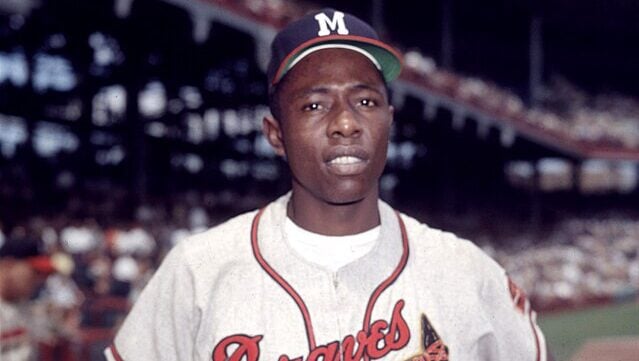
Hank Aaron #31: Hammerin’ Hank’s card contains one of the hobby’s most interesting uncorrected errors, showing Willie Mays sliding into home plate instead of Aaron himself, though he’s wearing a Milwaukee cap.

Al Kaline #20: Commemorates the youngest batting title winner in history at the time. Kaline also never played a single day in the minor leagues before joining the majors straight from high school in 1953.
Willie Mays: The ‘Say Hey Kid’ Who Changed Everything
Mays’ 1956 Topps card captures him during a time when he was redefining what center field excellence looked like. The Say Hey Kid combined power, speed, and defensive brilliance in ways that still influence how we evaluate five-tool players today while suiting up for the New York Giants.
The ’56 season was part of Mays’ prime, as he put up numbers that’d cement his legacy as one of the greatest all-around players in baseball history. His over-the-shoulder catch in the 1954 World Series had already become legendary, and by 1956, he was establishing himself as the complete package by hitting for average and power while patrolling center field.
Between 1954 and 1956, a typical year at the plate for Mays included a .320/.393/.627 line while averaging 42 homers, 36 doubles, 11 triples, 107 RBI, 114 runs scored, and 24 steals.
Mays cards are investment pieces, but they’re also connections to a player who brought joy and excitement to every at-bat, every fly ball, and every stolen base. The 1956 Topps Mays has become one of the most graded cards in the set because collectors recognize its historical significance and the way it captures Willie during his peak.
Hank Aaron: The Quiet Storm Building Toward Greatness
Hammerin’ Hank was just beginning his march toward immortality in 1956. Aaron was in his third season with the Milwaukee Braves and starting to show the consistent excellence that defined his career.
Aaron would go on to break Babe Ruth’s home run record in 1974. But in 1956, he was starting to show why he became a perennial All-Star after hitting .328 with 26 home runs and 92 RBI as a 22-year-old, placing third in MVP Award voting. The consistency he displayed throughout his career — which includes him slugging 20-plus homers for 20 straight years — remains one of baseball’s most remarkable achievements.
The hobby has always valued Aaron cards, and rightfully so. They serve as reminders of both his on-field brilliance and his grace under pressure as he chased Ruth’s record. The 1956 Topps Aaron shows a player on the cusp of superstardom before the world fully understood what they were witnessing.
The 1956 Topps Set: Baseball’s Last Artwork Masterpiece
The 1956 Topps baseball release holds a unique place in hobby history as the final set to feature painted artwork before Topps transitioned to photos. The set captured 16-team baseball at a pivotal moment – the Dodgers were defending their only World Series title won in Brooklyn, and the game itself was about to undergo massive changes by expanding to the West Coast.
What makes this set truly special is its concentration of Hall of Fame talent during their prime years. You’re not just collecting rookie cards or end-of-career tributes – you’re getting legends at their peak, and displayed in beautiful artwork that represents baseball’s golden age.
Love home runs? Sign up for my Substack today and start getting interesting home run-related observations straight to your inbox! And if you’re new to MLB Daily Dingers, it’s probably best to start here.