A graded 1952 Topps Mickey Mantle card is currently generating serious buzz, and for good reason. Heritage Auctions is offering a PSA NM-MT 8 example that’s already commanding a bid north of $800,000 before the buyer’s premium kicks in.
With the reserve set to post on December 16 and bidding activity heating up, this iconic piece of cardboard is poised to cross the million-dollar threshold when the hammer finally drops later this week.
Editor’s Note: Looking to Sell Sports Cards? Here’s How to Do It Quickly & Easily
A 1952 Topps Mickey Mantle Card in Exceptional Condition
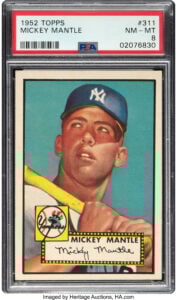
According to Heritage’s listing, the current highest bid on this Mantle card at the time of writing is $812,500 ($991,250 once you factor in the 22% buyer’s premium).
What makes this piece of cardboard stand out is its condition. At PSA NM-MT 8, it sits among the elite tier of surviving Mantles. PSA’s population report shows that fewer than 15 cards have achieved a higher grade out of more than 2,000 submitted. This is like finding a needle in a haystack, except the haystack is the size of a football field and the needle costs over a million bucks.
The listing points out the card’s vibrant colors and clean gloss, noting that it appears “virtually unchanged from its date of issue.” When you’re dealing with cardboard that’s over 70 years old, that level of preservation is just outrageous.
Why the 1952 Topps Mantle Commands Such Premium Prices
Despite its extreme popularity, the 1952 Topps isn’t Mantle’s rookie card. That honor belongs to his 1951 Bowman issue. If that’s the case, then why is the Topps issue so much more in demand?
It comes down to a perfect mix of scarcity, design, and cultural significance. Topps produced their 1952 set with a 407-card checklist using larger card dimensions than anyone had attempted before. Mantle’s card fell into the high-number series (#311-407), which hit the market late in the baseball season when consumer interest had already declined.
The distribution challenge resulted in a lot of unsold inventory. According to hobby lore, Topps’ solution was to dump countless unsold cases – including who knows how many Mantle cards – into the Atlantic Ocean several miles offshore.
Even Damaged Examples Still Command Serious Money
Not everyone can drop a million dollars on a PSA 8 Mantle, but even low-grade examples of 1952 Mantles can fetch four or five figures.
One version of this card, which had pink highlighter on it, still sold for $17,400. Two other examples of beat-up Mickey Mantle cards sold for $30,000-plus combined at a recent auction.
How is this possible? Well, what this card means to the hobby outweighs the condition for many buyers. Any authentic 1952 Topps Mantle is a tangible connection to baseball history. While ultra-high-grade specimens command six and seven figures, a PSA 4 might run for $80,000, and a PSA 6 could reach more than $180,000, according to Sports Cards Pro data.
Mantle’s Hall of Fame Power Made Him a Legend
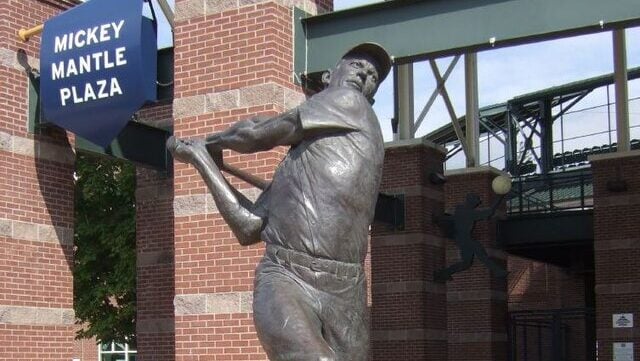
Mantle’s Hall of Fame career tells the story of one of baseball’s most dominant power hitters. He played all 18 of his big-league seasons in the Bronx with the New York Yankees. His 536 career homers ranked sixth all-time at the time of his retirement.
He’s been passed quite a bit, but he still ranks 18th on the all-time list. Not bad for someone who hasn’t suited up for a game since 1968, right?
It’s also worth noting that Mantle is the most prolific power source among switch-hitters. Those 536 taters are at the top of that leaderboard, and his 54 homers in 1961 were the most in a season by a switch-hitter until Cal Raleigh passed him in 2025.
The Commerce Comet won the Triple Crown in 1956 after leading the American League in batting average (.353), home runs (52), and RBI (130). He took home three MVP awards and helped the Yankees win seven World Series titles while playing through chronic injuries that would’ve ended the careers of most players.
The combination of Mantle’s sustained individual on-field excellence and championship success in a large media market like New York created the perfect foundation for his cards to become blue-chip investments across multiple generations of collectors. It’s going to be fun watching those final bids roll in at Heritage for this piece of cardboard.
Love home runs? Sign up for my Substack today and start getting interesting home run-related observations straight to your inbox! And if you’re new to MLB Daily Dingers, it’s probably best to start here.