The 1956 Topps baseball cards release is one of the most celebrated in hobby history. These cards gave us a glimpse of legends at pivotal moments in their careers, and today’s collectors are paying premium prices to own pieces of that golden era.
But just how much are some of the cards from this legendary set worth in today’s market? Let’s break down the valuations on five gems that stood out to me.
Editor’s Note: Looking to Sell Sports Cards? Here’s How to Do It Quickly & Easily
5 Iconic 1956 Topps Baseball Cards Commanding Serious Money
Here are five heavyweight hitters from the ’56 Topps lineup and what they’re fetching in various high-grade conditions:
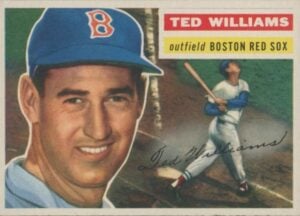
Ted Williams Gray Back #5: This great view of the Splendid Splinter sold at Heritage Auctions in February 2020 for $22,200. Since that happened before the huge sports card boom during COVID, you know high-grade examples of this cardboard are worth much more than that now.
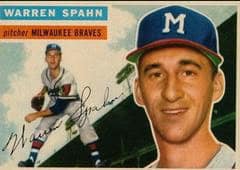
Warren Spahn White Back #10: One of the greatest left-handers ever, the value of Spahn’s white back variation can push $7,000, per Sports Cards Pro data.

Ernie Banks White Back #15: Mr. Cub’s infectious enthusiasm translates to serious collector demand, with recent PSA 8 sales hammering between $2,000 and $3,000.

Jackie Robinson Gray Back #30: Robinson’s final mainstream card before retirement carries plenty of historical significance. A PSA 9 example sold at Heritage Auctions in July for $170,800.

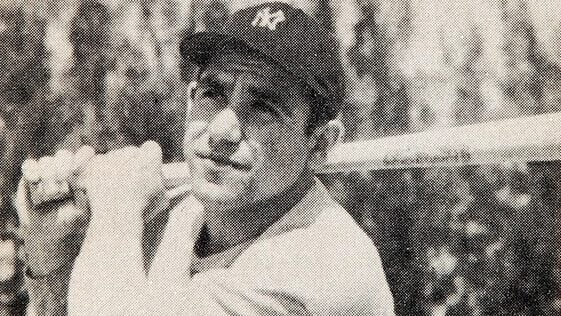
Yogi Berra White Back #110: The beloved Yankees catcher’s card (and one of baseball’s most quotable personalities) could fetch as much as $30,000 in perfect condition, according to Sports Cards Pro.
Jackie Robinson’s Final Topps Card Carries Historic Weight
Robinson’s card from the 1956 Topps set holds special meaning because it was his last appearance in a regular Topps release before he retired following the season.
The card’s value reflects that significance. Sports Cards Pro data pegs one of these cards in PSA 10 condition at more than $180,000. Drop down to PSA 9, and you can see how the price has changed in a short period. A card in this condition sold for $66,000 via Heritage in October 2024…only to sell for $170,800 in July 2025 (also via Heritage).
And while the price drops significantly for cards in lower grades, it’s not chump change. PSA 7 examples consistently sold for more than $2,000 throughout 2025. If you’re lucky enough to find one that’s not graded, you can probably get your hands on it for anywhere between $300 and $1,000.
The gray back variation also adds another layer of intrigue. These cards featured gray cardboard stock on the back, which created a subset that collectors actively pursue. Robinson’s on-field achievements speak for themselves. They include being the 1947 Rookie of the Year and the 1949 MVP, as well as being named to seven All-Star teams and finishing his Hall of Fame career with a .313 lifetime average.
But his cultural impact weighs heavier, especially being the player to break MLB’s color barrier in 1947. All of this combined is precisely why his cards are still viewed as blue-chip investments.
Yogi Berra: The Yankees Legend Behind Card #110
Berra’s 1956 Topps card captures one of baseball’s most beloved figures during the prime of his Hall of Fame career. Between 1950 and 1956, the backstop never finished lower than fourth in MVP Award voting. He also won the honor three times during this span (1951, 1954, and 1955).
The left-handed hitter finished second in MVP Award voting in 1956 after slashing .298/.378/.534 with 30 home runs, 29 doubles, 105 RBI, and 93 runs scored in 140 games. Instead of winning his fourth MVP that year, Berra instead won his seventh World Series title. That’s a worthy trade if I’ve ever seen one!
The white back #110 card shows solid market performance across all grade levels. That $30,000 PSA 10 valuation from Sports Cards Pro shows how hard it is to find ’56 Topps cards in flawless condition. In PSA 9, Berra’s card can push $5,000, while PSA 8 examples can land around $2,000.
What makes Berra’s card noteworthy is his crossover appeal. Beyond the 10 World Series rings and three MVP awards, Yogi became a cultural icon known for his inadvertently hilarious (but also thought-provoking) quotes. That mainstream recognition keeps demand consistently strong from both baseball collectors and casual fans who appreciate his personality. Being a career Yankee after spending all 19 years of his playing career in the Bronx doesn’t hurt, either.
The 1956 Topps Set’s Enduring Legacy
The 1956 Topps release was a turning point in baseball card production. This 340-card set featured actual photos rather than painted portraits, giving collectors authentic game-action shots and posed images that felt more real than before.
Condition challenges hurt this set more than most. The gray and white back variations used different cardboard stock susceptible to wear, and the borders on these cards show even minor handling damage. That’s why high-grade examples can fetch such high prices. They’re legit outliers that survived decades without significant deterioration.
Today’s market recognizes the ’56 Topps set as essential vintage material. For collectors building comprehensive vintage portfolios, owning high-grade examples from this set is a great move — both from the standpoint of investing and genuine appreciation for hobby history.
Love home runs? Sign up for my Substack today and start getting interesting home run-related observations straight to your inbox! And if you’re new to MLB Daily Dingers, it’s probably best to start here.