Yogi Berra was a man of many talents. Not only was he a Hall of Fame catcher and three-time MVP Award winner for the New York Yankees, but he also had an uncanny ability to make people laugh by just saying what was on his mind.
While some are surprisingly affordable when compared to other Yankees legends from the same era, there are plenty of Yogi Berra baseball cards that are worth a pretty penny in today’s market. Sports Illustrated’s David Solow shared information on the most valuable pieces of cardboard featuring the 10-time World Series champ.
Let’s take a look at the top five before I talk more about my favorite, along with Berra’s overall hobby legacy.
Editor’s Note: Looking to Sell Sports Cards? Here’s How to Do It Quickly & Easily
The Top 5 Yogi Berra Baseball Cards by Value
According to Solow, these five Yogi Berra baseball cards are currently the most expensive. I’ve also included the sale price and condition for each of the cards listed. All images are courtesy of Sports Cards Pro, unless otherwise noted.
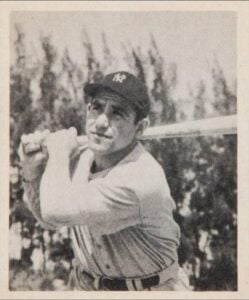
1948 Bowman #6 Rookie: $192,000 (PSA 10)
1958 Topps #370: $185,390 (PSA 10)

1952 Bowman #1: $75,000 (PSA 9)

1953 Topps #104: $56,400 (PSA 9)

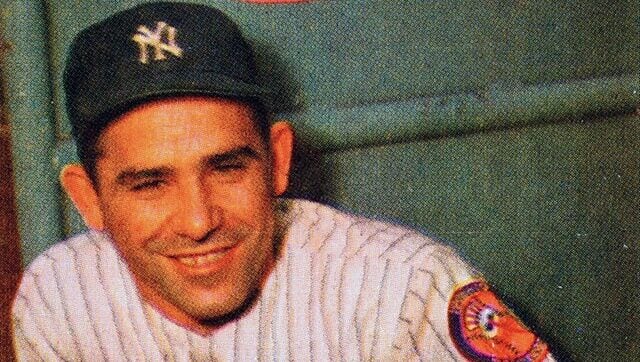
1953 Bowman Color #121: $54,900 (PSA 9)

These are extreme examples because they’re all pristine copies. The reality is that mid-grade examples of these same cards sell for hundreds rather than hundreds of thousands. You’re looking at a fraction of the six-figure price tag for a PSA 5 1948 Bowman rookie ($1,353, according to Sports Cards Pro), which opens doors for everyday collectors.
Why the 1953 Bowman Color #121 Stands Out
Upon looking at all five of these cards more closely, the 1953 Bowman Color #121 is my favorite for a couple of reasons.
This card represents Yogi at the peak of his career. He already had one MVP Award under his belt (in 1951), and this card was produced during a stretch in which Berra finished within the top four of MVP Award voting seven straight years from 1950-56 (he won the award again in ’54 and ’55). It’s worth noting that the backstop was already a five-time World Series champ by the time this card was released, too.
I love that this card shows Berra lounging in the dugout and having a good time. He loved baseball, and this picture of him provides a small glimpse into his personality, especially compared to some of the other cards featured above. The 1953 Bowman Color set also marked a turning point, shifting from painted artwork to actual color photos.
Yogi Berra’s Hall of Fame Career Justifies the Investment
The card values of these pristine copies make perfect sense when you dig into Yogi’s résumé. Nobody has more World Series rings than him, and he was also an 18-time All-Star. The Hall of Famer finished his career with 358 home runs, 1,430 RBI, 1,175 runs scored, and an .830 OPS.
But Yogi’s impact went beyond the stats on his baseball cards. His ability to call games and handle pitchers helped push the impact of catchers on the game forward. Bill Dickey mentored him, and Berra took those lessons to create his own catching legacy that influenced generations who followed.
The Yankees won 14 AL pennants during his time with the club, and Berra’s teammates consistently credited him as the glue that held those championship teams together, which might be the best compliment any player could get.
The Yogi Effect on Baseball Card Collecting
Yogi Berra baseball cards represent incredible value compared to other legends from the same timeframe. Mickey Mantle cards from the 1950s command astronomical prices. It’s the same story with Ted Williams. But you can still build a meaningful Yogi collection without taking out a second mortgage.
Part of that pricing gap stems from Yogi’s personality. While other players might’ve had larger-than-life personas, Yogi remained the everyman catcher with a self-deprecating sense of humor and excellent Yogi-isms.
The market is starting to correct that undervaluation. Serious vintage collectors see that Yogi’s cards offer better ROI potential than overheated alternatives. His military service adds another layer of collectibility that resonates with collectors.
Those stories transform these vintage baseball cards from simple collectibles into tangible connections with a legend. The 1948 Bowman rookie that sold for $192,000 back in 2017? It’ll likely look like a bargain in another decade.
Love home runs? Sign up for my Substack today and start getting interesting home run-related observations straight to your inbox! And if you’re new to MLB Daily Dingers, it’s probably best to start here.