Although he played a large portion of his career in the shadow of Babe Ruth, Lou Gehrig found a way to become a legend in his own right. After all, someone had to protect the Sultan of Swat in the lineup, right?
If it wasn’t for his ALS diagnosis, who knows how much longer he could’ve played (and dominated). He retired in 1939, but just the year prior, he produced a .932 OPS with 29 home runs and 114 RBI.
Editor’s Note: Sign up for the Bases Loaded Bulletin — my monthly print newsletter — for deep dives like this delivered straight to your mailbox. Or grab a copy of The Power Kings for the full story of every MLB franchise’s greatest home run seasons.
Lou Gehrig’s Decade For The Ages
The consistent dominance Gehrig produced throughout his career was remarkable. From 1927-38, he hit at least 20 home runs with 100-plus RBI each year.
But if we look strictly at the 11 seasons between 1927 and 1937, he was in another stratosphere. This period consisted of 1,695 games and 7,707 plate appearances. Gehrig slashed .350/.459/.659 while averaging 39 home runs, 154 RBI, and 141 runs scored. He averaged that!
That’s how a ballplayer can get himself on the verge of 2,000 RBI in fewer than 20 years (he drove in 1,995 in 17 seasons).
Gehrig led the league in both homers and RBI on two different occasions. The first time was in 1931 when he slugged 46 dingers with a whopping 185 RBI. He collected 42 RBI through the end of May, but it’s what he did the rest of the way that’ll make your jaw drop. The first baseman posted four consecutive 30-plus RBI months to finish the year. His best was in July when he drove in 41 while slugging 11 dingers.
Accomplishments During This Stretch of Domination
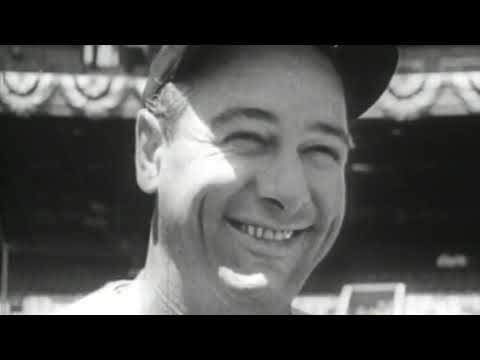
As you can imagine, putting up huge numbers like this every year led to some personal accolades for the Iron Horse. Here are the categories he led the league in and how many times he finished the regular season at the top of the leaderboard.
- Runs scored: 4 times
- Hits: 1 times
- Doubles: 2 times
- Home runs: 3 times
- RBI: 5 times
- Walks: 3 times
- Batting average: 1 time
- On-base percentage: 4 times
- Slugging percentage: 2 times
- Total bases: 4 times
Gehrig won two MVP Awards during this stretch (1927 and 1936). He also finished no lower than fifth in voting for eight straight years between 1930 and 1937.
The Iron Horse Never Missed a Game
This entire 11-year prime happened while Gehrig was in the middle of his consecutive-games streak, which reached 2,130 by the time he pulled himself from the lineup in 1939. The streak began back in 1925, when he took over at first base for Wally Pipp, and it never stopped. Not for an injury, not for a slump, not for anything, until Gehrig benched himself as his health declined.
That means every one of those averaged numbers from above, the .350/.459/.659 slash line, the 39 homers, the 154 RBI, happened without him ever getting a day off. It wasn’t just power and consistency, though — it was power and consistency without a single break. The record stood as one of the sport’s most untouchable marks for 56 years until Cal Ripken Jr. eclipsed it in 1995.
A Triple Crown That Somehow Didn’t Win Him MVP
Buried right in the middle of this stretch is an outrageously gaudy season that somehow didn’t lead to him winning any hardware. In 1934, Gehrig won the Triple Crown, leading the American League with a .363 average, 49 home runs, and 165 RBI. He also topped the league in total bases with 409 and posted a 1.172 OPS.
And somehow, he didn’t win MVP. Mickey Cochrane, the player-manager behind Detroit’s pennant-winning club, took home the award instead. Gehrig finished fifth in the voting. This feels like one of the most MVP-like non-MVP seasons in MLB history, and I’d put this performance up against any others in a head-to-head debate.
Numbers That Still Hold Up Nearly a Century Later
Gehrig finished his career with a .340 average, 493 home runs, 2,721 hits, and a 179 OPS+, meaning he produced roughly 79% better than a league-average hitter across his entire career. That figure still ranks among the five best in MLB history, alongside names like Ruth, Ted Williams, and Barry Bonds. And Gehrig compiled it all in 17 seasons, several fewer than most of the players around him on that leaderboard.
Unfortunately, he never got the chance to chase down more milestones. His ALS diagnosis forced him out of the lineup in 1939, and the Hall of Fame waived its standard waiting period to induct him that same year through a special election. He passed away less than two years later at age 37. The 11-year stretch broken down above wasn’t just a career peak. Given how things played out, it was basically the whole show of his marvelous career.
Enjoyed this one? Sign up for the Bases Loaded Bulletin — my monthly print newsletter — for deep dives like this delivered straight to your mailbox. Or grab a copy of The Power Kings for the full story of every MLB franchise’s greatest home run seasons.