Standing in the sporting goods aisle, staring at bat labels covered in mysterious numbers like “-10,” “-5,” and “-3,” you’re not alone in feeling overwhelmed. These cryptic codes represent baseball bat drop weight, arguably the most important specification for selecting youth baseball equipment. However, it can sometimes be the most confusing concept for parents to grasp.
But once you understand how baseball bat drop weight works and why it matters, choosing the perfect bat for your young slugger becomes straightforward.
READ MORE: BBCOR vs USSSA Bats: Complete Guide to Choosing the Right Bat
What Is Drop Weight? The Simple Math Explained
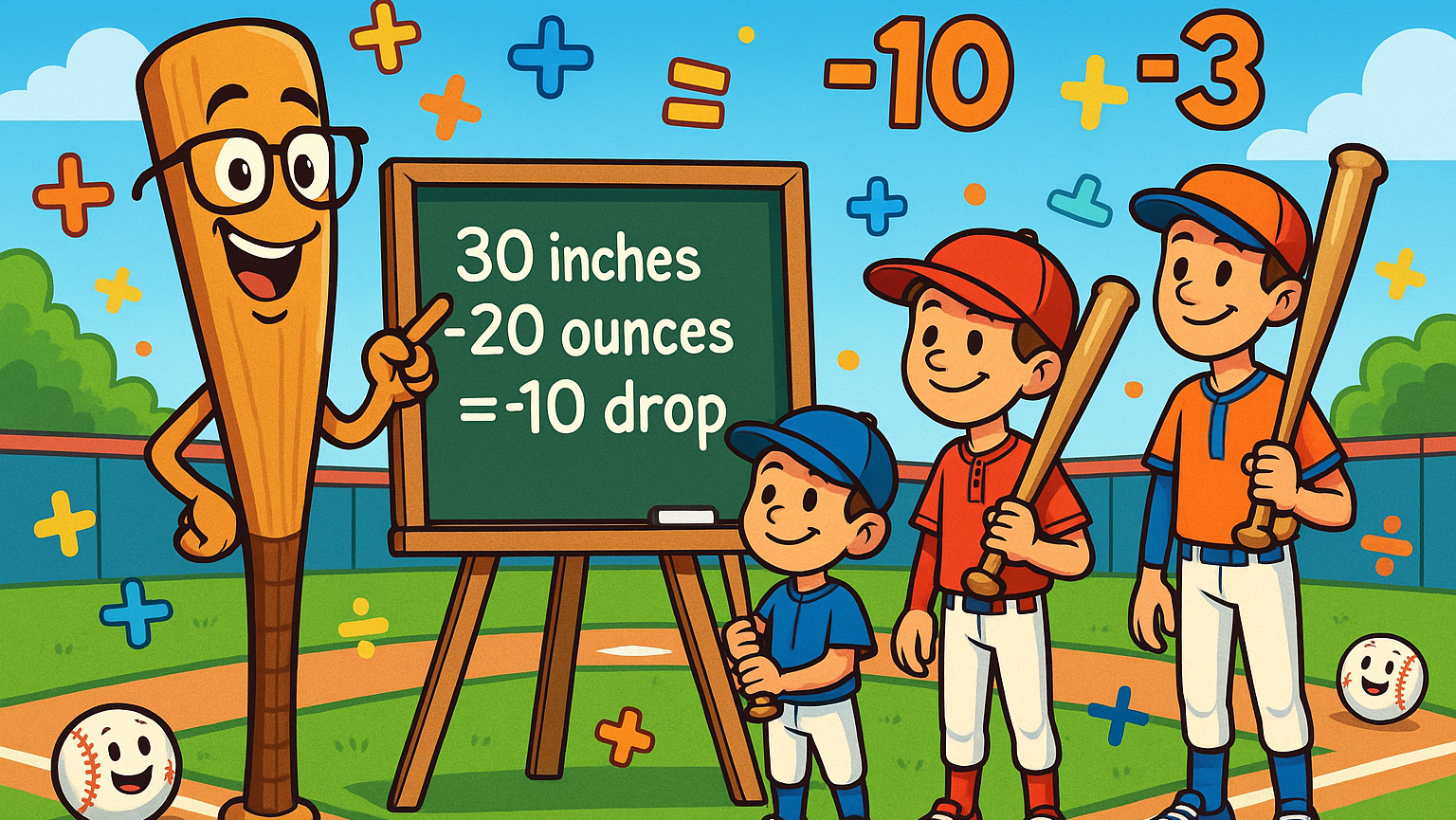
Drop weight represents the relationship between a bat’s length and weight, calculated by subtracting the weight in ounces from the length in inches. A 30-inch bat weighing 20 ounces equals a -10 drop weight.
The negative number isn’t arbitrary; it’s baseball’s universal standard for expressing this relationship. Think of it as your roadmap to appropriate bat selection. The higher the negative number (like -12 or -13), the lighter the bat feels relative to its length. Lower negative numbers (like -3 or -5) indicate heavier, more end-loaded bats.
This drives everything about how a bat performs. A 32-inch bat with a -10 drop weighs 22 ounces, while the same length with a -8 drop weighs 24 ounces. Those two extra ounces can change swing speed, control, and power potential.
The physics reveal why this matters so much. Research from the American Sports Medicine Institute shows that every additional ounce of bat weight reduces swing speed by approximately 1-2 mph. For developing players still building strength and coordination, that difference often determines whether they make solid contact or struggle through frustrating at-bats.

Understanding Baseball Bat Drop Weight Categories
Ultra-Light Drops (-12 to -13): The Confidence Builders
These options target ages 6-9 or smaller players who need maximum bat speed to develop proper timing. The ultra-light construction allows young athletes to focus on swing mechanics without fighting their equipment.
The trade-off? Limited power transfer on contact. But for players learning fundamentals, the confidence boost from consistent contact outweighs any power concerns.
Standard Youth Drops (-10 to -11): The Sweet Spot
Here’s where most youth baseball magic happens. Ages 9-12 typically thrive with these balanced options that provide optimal swing speed while introducing enough weight for meaningful power development. The -10 drop has become the gold standard because it offers the perfect compromise between control and performance for developing players.
Most youth leagues center their equipment standards around this range, making it the natural progression point for players advancing from ultra-light options.
Advanced Youth Drops (-8 to -9): The Bridge
Stronger 12-14 year olds benefit from this transition category that builds arm strength while maintaining reasonable bat speed. These drops serve as crucial preparation for the eventual jump to high school requirements.
Players who master -8 or -9 drops often experience smoother transitions to BBCOR standards, avoiding the performance shock that can derail high school freshmen.
High School Standard (-3 BBCOR): The Reality Check
All high school and college baseball requires -3 drop BBCOR certification, creating a universal performance standard. This represents a significant jump for most players. It’s the equivalent of adding 4-6 ounces compared to typical youth bats.
The adjustment challenges are real, but players who time this transition thoughtfully often discover improved swing mechanics and genuine power development.
Age-Based Recommendations That Actually Work
Ages 6-8: Start with -12 to -13 drops for maximum success. Focus on building swing confidence rather than power development. The goal is to create positive associations with making solid contact.
Ages 9-11: Transition to -10 or -11 drops as strength develops. This sweet spot allows continued success while introducing players to slightly heavier equipment. Many competitive travel leagues target this range.
Ages 12-13: Begin progression toward -8 or -9 drops for advanced players, while others may benefit from staying with -10 options longer. Individual assessment trumps chronological age every time.
Ages 14-plus: Strategic movement toward -3 BBCOR requirements, often benefiting from a gradual progression rather than immediate jumps.
How Drop Weight Affects Your Player’s Performance
The relationship between drop weight and performance extends beyond the math. Lighter drops increase swing speed, improving contact consistency and timing forgiveness. Heavier options generate more momentum transfer but demand greater strength and precision.
Studies tracking youth player development show that matching drop weights appropriately improves contact rates by 15-20% compared to incorrectly weighted equipment. That translates directly into more base hits, increased confidence, and sustained enthusiasm for the game.
The sweet spot effectiveness changes dramatically with drop weight selection. Lighter bats expand the effective hitting zone, while heavier options demand more precise barrel placement for optimal results.
Your Path to Perfect Drop Weight Selection
Start with league requirements since these represent non-negotiable parameters that eliminate guesswork. Next, honestly assess your child’s current strength, coordination, and experience level. Finally, test multiple options whenever possible through borrowed equipment or store demonstrations.
Remember, the perfect drop weight exists for every player at every development stage. Your job involves finding that match and adjusting as your young athlete grows. Getting drop weight right can transform your child’s hitting experience. When equipment matches ability, skills develop naturally while confidence builds, which allows the game to remain fun instead of constantly frustrating.