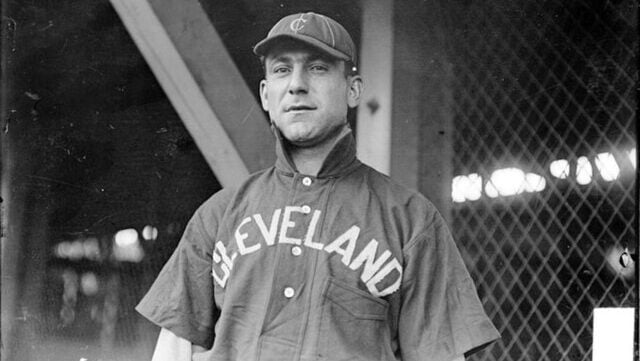
The Napoleon Lajoie baseball card from Goudey’s legendary 1933 set made headlines with another jaw-dropping sale in the not-too-distant past. But this isn’t your typical cardboard treasure, folks. It’s a piece that technically didn’t even exist until frustrated collectors started asking about it.
While the price tag is very expensive, that’s not the only thing that makes this card extraordinary. The backstory of how it was produced is pretty unreal.
Editor’s Note: New to MLB Daily Dingers? Then Start Here!
The Napoleon Lajoie Baseball Card Mystery That Captivated an Industry
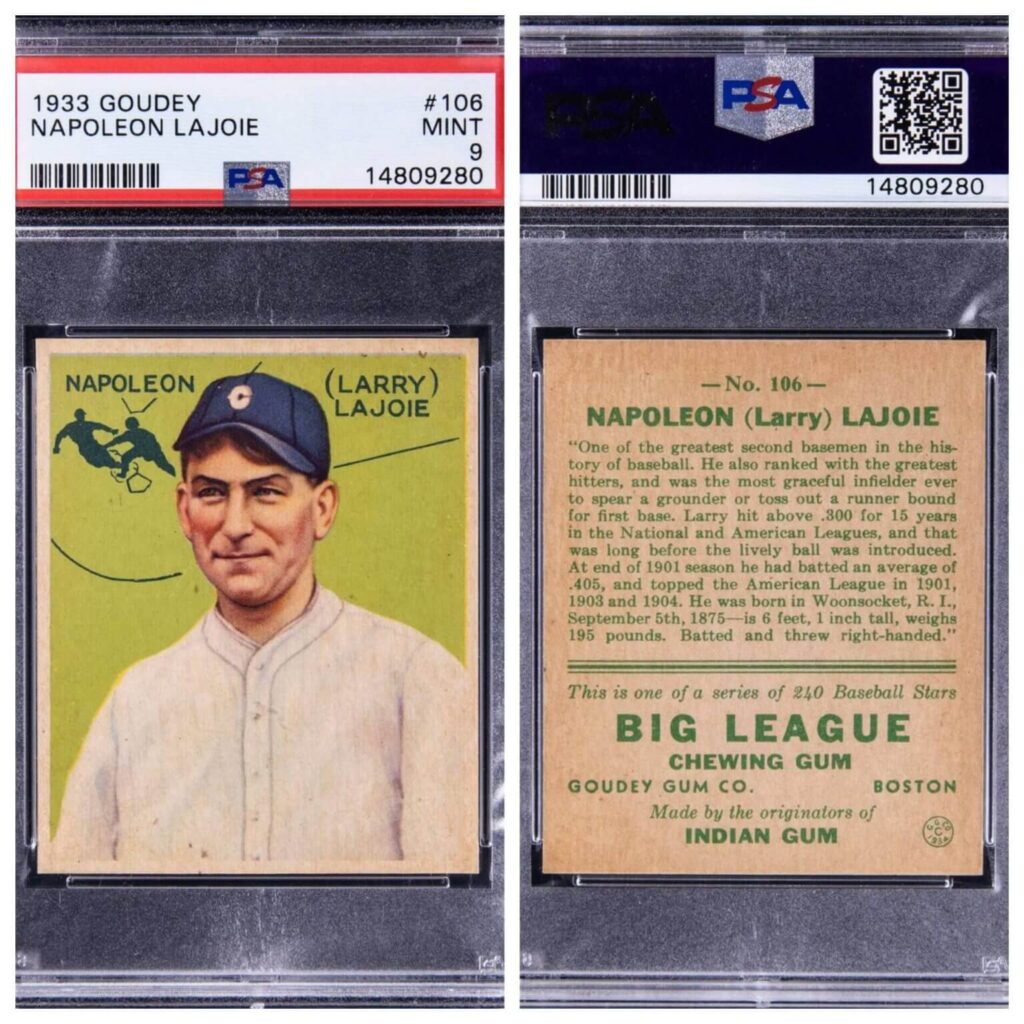
The Athletic’s Michael Salfino recently dove into the topic of this rare card. The Hall of Fame second baseman wasn’t included in the original 1933 Big League Goudey release. It was simply a missing number that drove collectors crazy.
People kept writing to Goudey asking about the missing #106 card. The company eventually caved and created the card in 1934, mailing it directly to those who complained about it not being included, with correspondence paper clipped to the card. The paper clips left permanent indentations on most surviving examples, forever impacting condition grades.
Salfino noted that this card sold for just $300 in mint condition during the early 1970s. By 1980, that figure jumped to $6,500. Baseball broadcaster Joe Garagiola famously kept his copy in a bank vault by 1989, when it was worth $15,000. Recent CardLadder data shows the last PSA 9 graded example sold for $250,100 in 2023. No PSA 10 examples exist.
Inside the Legendary 1933 Goudey Baseball Card Set
The 1933 Big League Goudey set revolutionized baseball card collecting during the Great Depression. This 240-card set featured the game’s biggest stars across 10 series of 24 cards each. Kids could see through semi-transparent wrappers to identify players before purchasing, leading to frantic trading sessions.
The set included multiple cards of Babe Ruth, Lou Gehrig, and Jimmie Foxx, but card #106 was suspiciously missing.
Goudey had double-printed Ruth’s #144 card in the #106 slot. Robert Edwards Auctions confirmed this in 2015 when they sold an uncut sheet showing two identical Ruth cards where the Lajoie should’ve been. Here’s a glimpse at how rare the Lajoie card is, though — PSA has graded 1,350 examples of that double-printed Ruth card…compared to just 85 Lajoie #106s.
The Paper Clip Chronicles and Family Holdings
Most of the graded examples still have that paper clip indentation from Goudey’s 1934 mailing campaign. However, the highest-grade cards tell a different story.
According to veteran dealer Nick Migliaccio, who’s been involved in the business for five decades (via The Athletic), “The Napoleon Lajoie family ended up with the rest of them and through the years they’ve been let out one by one and usually those are in high grade because there are eight PSA 8s out there and nine PSA 9s.”
These family-held examples avoided the paper clip damage since they were never mailed to collectors.
Why This Card Continues Dominating Auction Houses
The 1933 Goudey Lajoie represents everything collectors are hunting for: serious rarity, a compelling backstory, and investment potential that’s been proven over decades. Unlike modern “short prints” manufactured for scarcity, this card’s rarity happened organically…and only because people kept complaining about not having the full set.
With no PSA 10 examples in existence, condition becomes critically important for the small number of high-grade survivors. The paper clip indentation is a blessing and a curse. It’s a permanent reminder of the card’s unique distribution and authenticity while also putting a limitation on the official card grades.
The Lajoie #106 is legit holy grail territory for vintage cards. It’s transformed from a printing omission into a quarter-million-dollar commodity. Sometimes, the most valuable treasures are the ones that were never supposed to exist in the first place.




2 responses to “Ultra-Rare 1933 Goudey Napoleon Lajoie Baseball Card Has an Unreal Origin Story”
Thanks love reading about rare cards
Thanks for reading! I agree – this was a cool story.