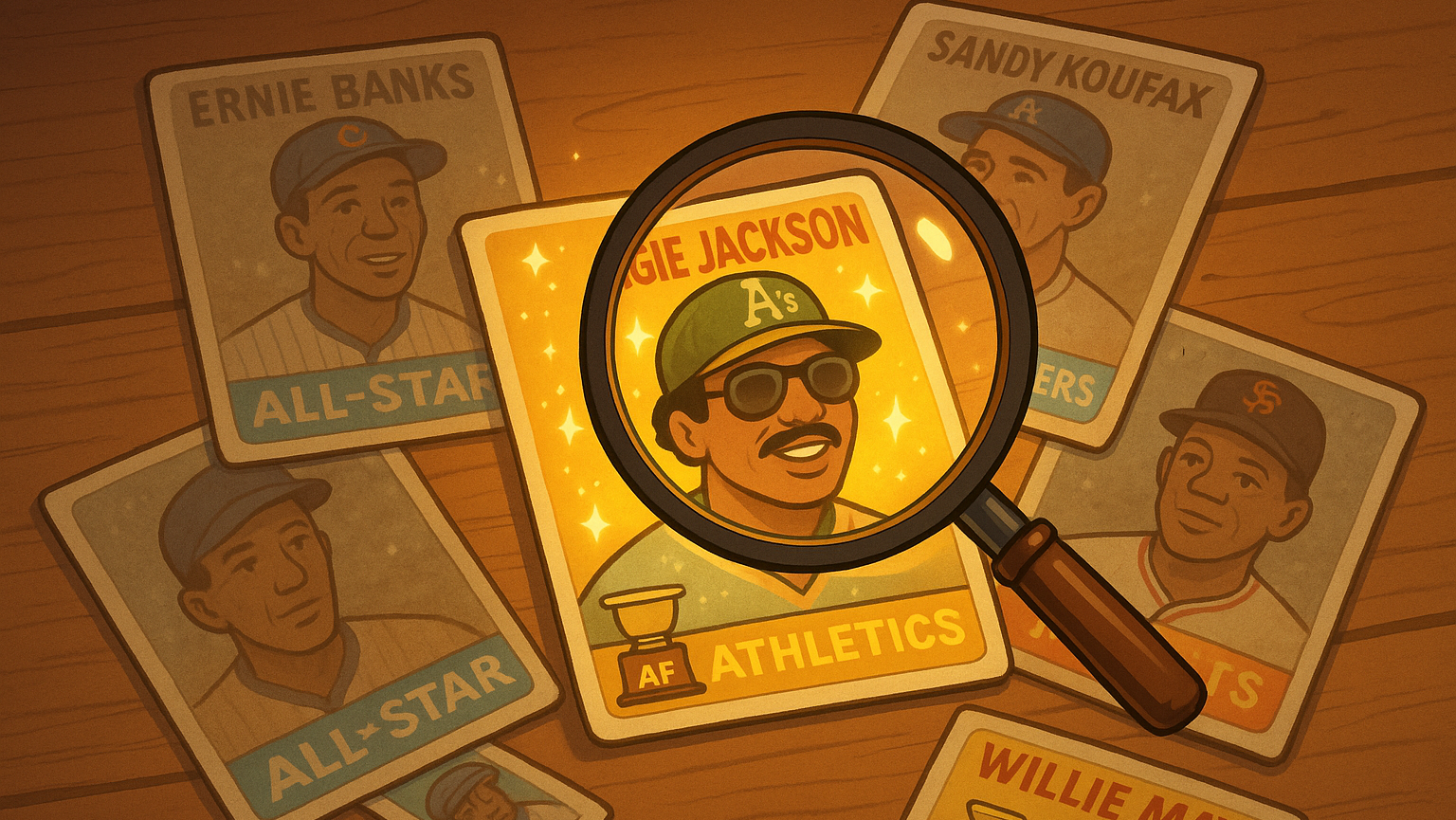
Picture this: you’re flipping through your childhood collection, searching for those Topps All-Star baseball cards with the distinctive banners and trophy logos. But unfortunately, you find out that some of the biggest names from the 1970s and early 1980s are missing from the All-Star subset entirely. And there’s nothing you could’ve done about it.
It’s one of the hobby’s most fascinating production quirks that’s turned certain “regular” cards into unexpected goldmines. Sports Illustrated’s Jason Schwartz recently noted that Topps inexplicably left out All-Stars from their dedicated subsets in four different years between 1975 and 1981.
The result? Their standard-issue cards have become significantly more desirable among collectors who recognize the historical significance of these production gaps.
Editor’s Note: New to MLB Daily Dingers? Then Start Here!
Complete List of ‘Missing’ Topps All-Star Baseball Cards
Here’s every player who got snubbed from Topps’ All-Star subset during this stretch, according to Schwartz:

Reggie Jackson (1975): The future Hall of Famer’s regular card has become a premium piece since it’s his only representation from that All-Star season, making it essentially a stealth All-Star card worth considerably more than typical base cards from the set.

Richie Zisk (1978): This would have been Zisk’s sole All-Star card recognition, and savvy collectors now hunt his standard 1978 Topps issue as a substitute, driving up values for what should be a common card.

Freddie Patek (1979): The diminutive shortstop’s omission created instant rarity where his base card serves as the only cardboard commemoration of his All-Star selection.

Ben Oglivie (1981): Milwaukee’s slugging outfielder joined the ranks of the overlooked, making his regular 1981 Topps card a must-have for completist collectors.
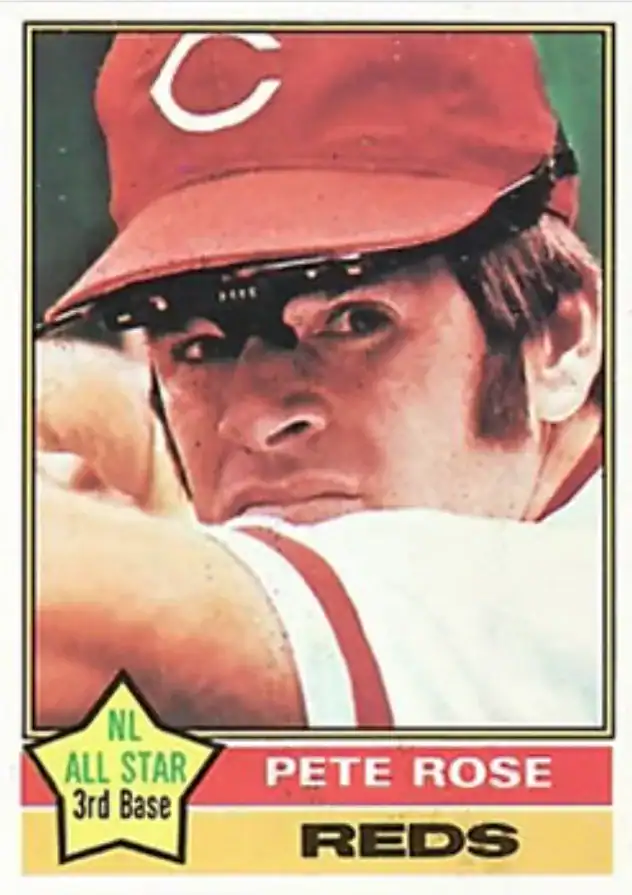
Pete Rose (1976): While Rose did appear in the All-Star subset, Topps listed him as a third baseman despite starting the 1975 All-Star Game in right field, creating confusion and making his card a curiosity piece. With that in mind, Schwartz included the Hit King as an ‘honorable mention’ for this list.
Why Reggie Jackson’s 1975 Snub Created Collector Magic
The most glaring omission has to be Reggie Jackson in 1975. He’d just finished a monumental 1974 season with Oakland, which included 29 home runs with 93 RBI while helping the A’s win their second straight World Series title. Jackson was also the starting right fielder for the American League in the 1974 Midsummer Classic.
Yet somehow, Topps decided to include Jeff Burroughs and Bobby Murcer in their All-Star subset while completely bypassing Jackson. The oversight is so baffling that it’s almost become part of his collecting lore. Jackson’s 1975 base card (#300 in the set) now carries premium value specifically because informed collectors understand it unofficially represents his All-Star season.
Richie Zisk’s Lost Legacy in Cardboard
Chicago White Sox outfielder Richie Zisk was having the season of his life in 1977. He eventually finished the year with a .290/.355/.514 triple slash, which included 30 homers, 101 RBI, and 78 runs scored in 599 plate appearances. This was good enough to earn his first of two All-Star Game selections and a 14th-place finish in MVP Award voting.
But unfortunately for Zisk, Topps didn’t give him an All-Star baseball card to officially commemorate his performance.
When collectors seek out Zisk’s 1978 Topps card (#24) today, they’re preserving the memory of a player’s career pinnacle that Topps somehow forgot to properly commemorate. The card has developed a cult following among those who appreciate the irony: a standard base card that’s actually rarer in terms of its significance than many of the “special” cards in the same set.
It’s a perfect example of how production oversights can create unexpected value in the collecting market, turning what should’ve been a routine card into a conversation piece that tells the story of both the player’s achievement and the company’s odd editorial choices.
These forgotten All-Star baseball cards remind us that sometimes the most interesting pieces in our collections aren’t the ones with the flashiest designs or the biggest names. They’re the ones that can tell a story about the quirks and oversights that make this hobby endlessly fascinating.
Love home runs? Sign up for my Substack today and start getting interesting home run-related observations straight to your inbox!