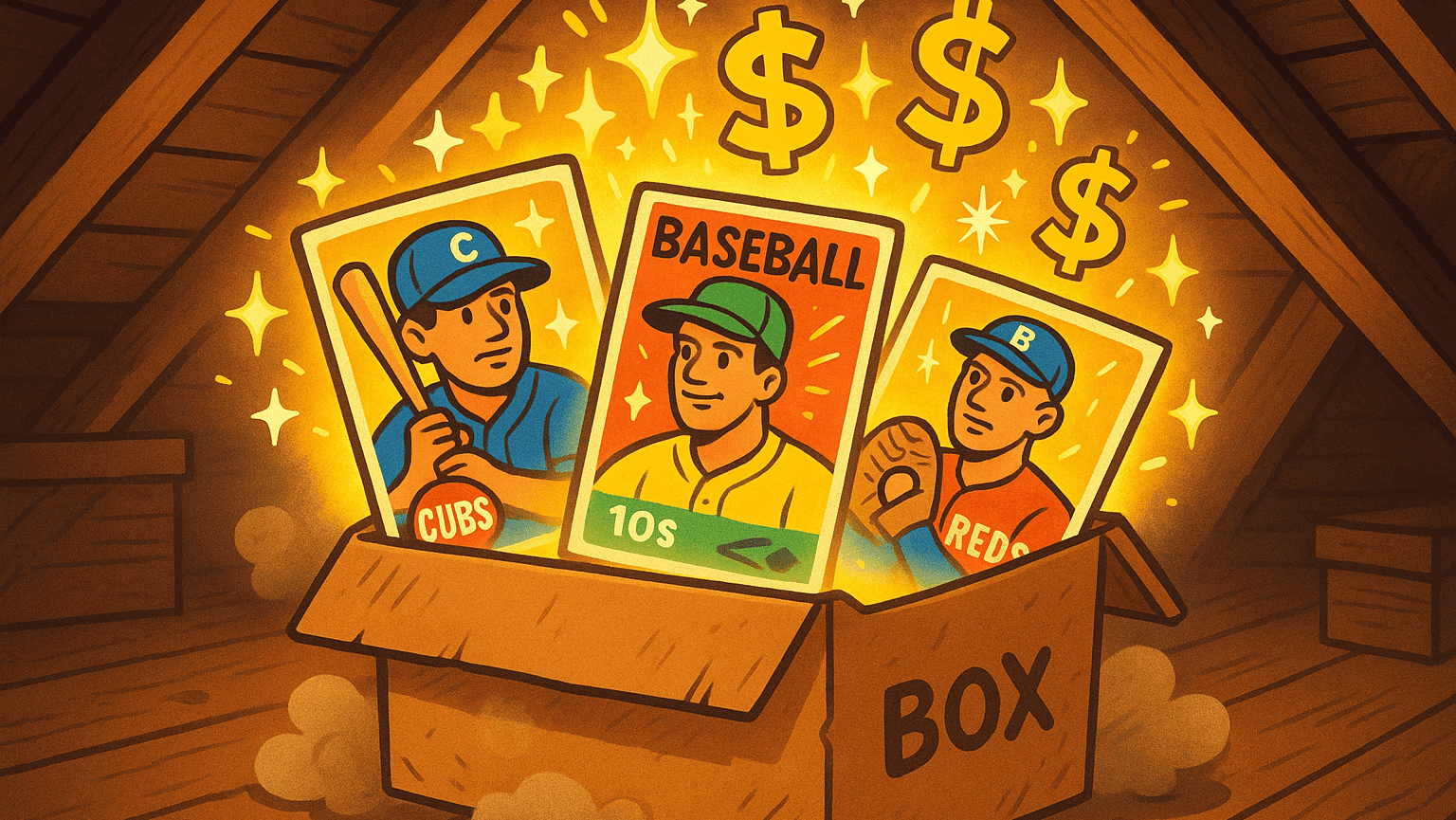
The 1960s produced some of the most iconic and valuable baseball rookie cards in hobby history.
David Gonos of the Happy Hobby Newsletter recently highlighted valuable rookies from every set since 1948. He put the spotlight on 10 different cards from the 1960s, so I picked five of my favorites to talk about in more detail below.
Editor’s Note: Looking to Sell Sports Cards? Here’s How to Do It Quickly & Easily
Five Rookie Cards That Define 1960s Baseball Card Value
According to Gonos, these are a handful of the heavyweight champs from the 1960s:

1968 Topps Nolan Ryan / Jerry Koosman (Card No. 177): A PSA 9 graded example can fetch around $30,000, with pristine PSA 10 versions having the ability to reach six figures.

1969 Topps Reggie Jackson (Card No. 260): High-grade versions of Mr. October’s rookie card regularly sell for $15,000-$25,000 depending on condition.
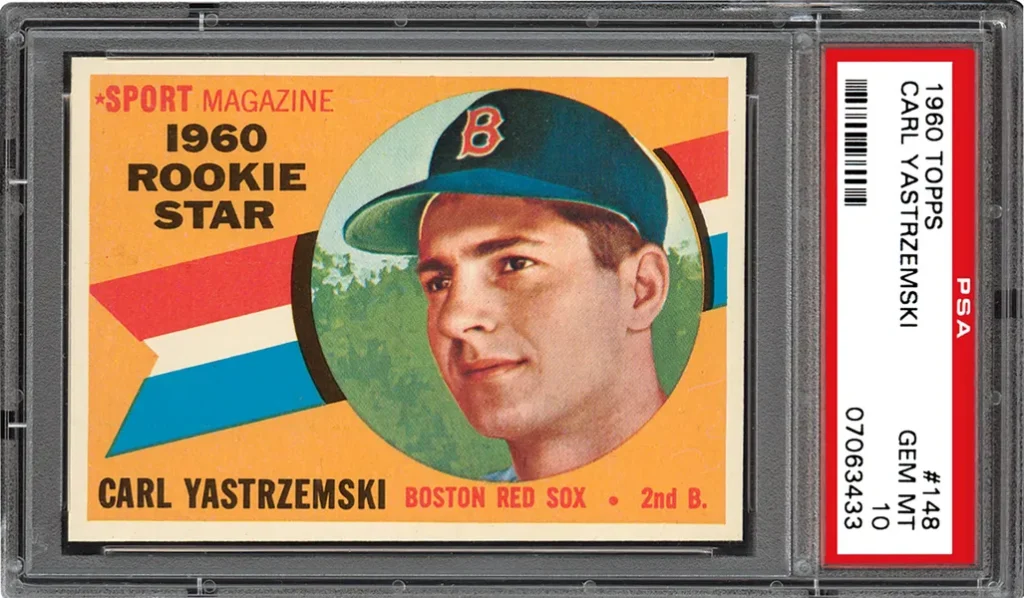
1960 Topps Carl Yastrzemski (Card No. 148): Yaz’s inaugural card reaches $8,000-$12,000 in top-tier grades, reflecting his legendary status in Boston.

1962 Topps Lou Brock (Card No. 387): The base-stealing icon’s rookie card trades in the $4,000-$7,000 range for premium examples.

1961 Topps Juan Marichal (Card No. 417): The Dominican Dandy’s first Topps appearance typically sells for $3,000-$5,000 in excellent condition.
Reggie Jackson: Mr. October’s Valuable Debut
Although he appeared in 189 games from 1967-68, the 1969 season marked Reggie Jackson’s explosive arrival on the national stage.
This was the year Jackson slugged a career-high 47 home runs for the Oakland A’s. It was accompanied by a .275/.410/.608 triple slash to go along with 118 RBI and 123 runs scored. He was selected to his first All-Star Game and finished fifth in MVP Award voting, which helped establish him as one of baseball’s premier power hitters.
His rookie card captures the beginning of what would become a Hall of Fame career spanning 21 seasons.
Jackson’s postseason domination — highlighted by his iconic three-homer performance in Game 6 of the 1977 World Series — has made his collectible status just a tad more meaningful than it’d be for a “typical” superstar. Sure, the 563 career home runs and five World Series titles help, but his huge personality is a big driver for the value of his cardboard.
Today’s market sees PSA 8 examples trading around $2,000-$3,000, while gem mint PSA 10s can surpass $25,000 at auction.
Lou Brock: The Stolen Base King’s Cardboard Legacy
Lou Brock’s 1962 Topps rookie card could be one of the most undervalued Hall of Fame cards from the decade, but maybe not for long.
Brock debuted with the Chicago Cubs in 1961 and played on the North Side for three and a half years before getting traded to St. Louis in what became one of the most lopsided deals in baseball history. He hit .263 with 16 steals through 477 plate appearances in 1962 for Chicago – solid but not spectacular – giving little indication of the base-stealing revolution he’d soon ignite.
Over his 19-year career, Brock registered 3,023 hits and stole 938 bases. He held the all-time stolen base record until some guy name Rickey Henderson eventually passed him. The Hall of Famer’s 118 stolen bases in 1974 stood as the single-season record for a while, as well.
Brock’s 1962 Topps card features him in a Cubs uniform, adding historical intrigue since most baseball fans and collectors alike immediately associate him with the Cardinals (and rightfully so!). The card’s value has appreciated steadily as collectors recognize Brock’s dominance and his role in changing how baseball valued speed.
The 1960s: When Baseball Card Collecting Became Big Business
The 1960s fundamentally transformed baseball card collecting from a childhood pastime into a serious hobby. Topps dominated the market, producing affordable sets that reached millions of kids who stuck cards in bicycle spokes and traded them on playgrounds. Many also stored them in shoeboxes that are now worth thousands.
What makes 1960s cards particularly valuable today is the mixture of scarcity and significance. Many cards from this era were literally destroyed through normal childhood use, making high-grade survivors pretty rare.
Meanwhile, the decade featured an incredible number of all-time greats entering the league. The current structure of the hobby has created unreal demand for these vintage treasures. Cards that sold for pennies in vending machines now fetch obscene prices, proving that sometimes the best investments are the ones gathering dust in your parents’ basement.
Love home runs? Sign up for my Substack today and start getting interesting home run-related observations straight to your inbox! And if you’re new to MLB Daily Dingers, it’s probably best to start here.


5 responses to “5 Valuable Baseball Rookie Cards From the 1960s – Do You Have Any?”
Where’s Pete Rose 1963 card?
David has it on his list! https://davidgonos.com/most-valuable-baseball-rookie-cards/#google_vignette
I have a trunk filled with baseball cards and comics ,they where my brother’s who passed in 96,also he had some older ones, unfortunately I know nothing about them,would you know if there’s a company that does appraisal for a while lot?
Hi, Tracy — I’m sorry to hear about your brother. Probably the easiest way to get a sense of what your cards could be worth is to download either the PSA Card or Collx app on your phone. That will allow you to scan images of the cards, and it will bring up information about value and sales in different conditions.
I put together a simple guide that can help you go from not knowing what they could be worth to selling them based on how much effort you’d like to put in: https://mlbdailydingers.gumroad.com/l/Sports-Card-Cashout
Ty for your time