If you’ve been following the sports card market lately, you already know that Ken Griffey Jr. rookie card values have been on fire. But rather than just talk about the overall trend, I wanted to dig into some numbers to show what these legendary pieces of cardboard have been selling for in real-time.
Sports Cards Pro has been tracking every sale, and the data tells a fascinating story about where the market stands right now for The Kid’s most famous card.
Editor’s Note: Looking to Sell Sports Cards? Here’s How to Do It Quickly & Easily
A Look at Recent Ken Griffey Jr. Rookie Card Sales Data
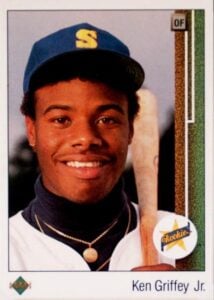
According to the latest completed auction data from Sports Cards Pro, the 1989 Upper Deck #1 has been moving consistently across all grade levels. Here’s a summary of what the most recent sales look like for each condition tier:
Ungraded copies have been trading hands regularly, with the most recent transactions showing prices clustered around the $70-75 range. But among five sales on November 24, three sold for more than $80 on eBay, with the highest one coming in at $109.50.
Grade 7 examples have averaged approximately $70-90 in recent completed sales. While this grade shows visible wear, it’s still certified authentic and represents an entry point for collectors on a budget.
Grade 8 cards have been selling in the $115-150 range. This is a solid middle ground—you’re getting a nice-looking card without the premium pricing of higher grades.
PSA 9 copies continue to be the sweet spot for serious collectors, with recent sales averaging between $190 and $450. With over 32,000 PSA 9 examples in existence, there are plenty available, but demand remains strong enough to push prices up.
PSA 10 examples are the crown jewel, and recent results show these gem mint beauties closing between $4,100-5,800 (all on eBay, as well). That’s a significant premium over lower grades, but for collectors chasing perfection, it’s the only option that matters.
Griffey Card Values Continue Climbing in 2025
The recent sales data doesn’t exist in a vacuum, either. It’s part of a larger surge that’s been building throughout 2025. Cllct.com noted in August that Griffey’s cardboard had seen a 32.5% increase in value compared to 2024.
Nobody’s entirely sure what’s driving this sudden renaissance for Junior cards. He hasn’t played since 2010, and his Hall of Fame induction happened back in 2016. Yet his cards are outperforming the broader baseball card market by a wide margin.
Some analysts speculate it’s because fans who grew up idolizing Griffey in the 1990s are now in their peak earning years and have the disposable income to chase childhood memories. Whatever the reason, the momentum shows no signs of slowing down.
Other Valuable Griffey Cards Worth Watching
While the 1989 Upper Deck #1 gets most of the attention (and rightfully so), Junior has several other cards that command serious money in the marketplace. The hierarchy of Griffey’s most valuable cards spans multiple eras and includes some surprising entries.
The 1991 Topps Desert Shield cards stand out as particularly special. These weren’t standard parallels because they were distributed to American troops during the Gulf War. The desert conditions damaged or destroyed many examples, making survivors incredibly scarce. Griffey’s #790 Desert Shield can reach nearly $10,000 in pristine condition.
Modern limited parallels are also fetching premium prices. The 2024 Panini Prizm Black Finite carries an ungraded value of about $1,500, while the 2022 Prizm Giraffe version sells for about $1,000 raw. The 1989 Topps Traded Tiffany #41T (with its limited print run of roughly 15,000 copies) commands $4,000-plus in PSA 10 condition.
Even his other 1989 rookies carry significant value. The Bowman and Fleer versions both show steady demand, though they trade at a fraction of the Upper Deck’s price. These alternatives give collectors multiple entry points into owning a piece of Griffey’s rookie year.
The Kid’s Lasting Impact on the Hobby
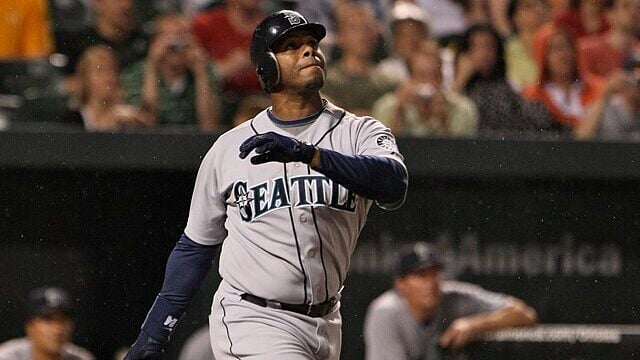
What makes Ken Griffey Jr. cards so popular isn’t just the numbers. I mean, 630 career home runs, 13 All-Star selections, and 10 Gold Gloves (among many other accomplishments!) certainly don’t hurt. But it’s also the emotional connection he forged with an entire generation of baseball fans.
As a ’90s kid who watched him rock that backward cap with a million-dollar smile and one of the game’s sweetest swings we’ll ever see, he made baseball fun during an era when the sport desperately needed it. His cards are tangible connections to a simpler time when opening a pack of Upper Deck felt like Christmas morning.
Today, whether it’s a war-era Desert Shield or a cutting-edge Prizm parallel, Griffey’s cardboard legacy continues to grow. For anyone else who grew up in the 1990s, that Upper Deck rookie will always be worth more than whatever the market says. But it sure doesn’t hurt that the market keeps validating our childhood instincts.
Love home runs? Sign up for my Substack today and start getting interesting home run-related observations straight to your inbox! And if you’re new to MLB Daily Dingers, it’s probably best to start here.